A free, ready-to-run toolbox talk for construction crews. Read it aloud at your morning huddle; it takes about ten minutes. Leer en español →
OSHA standard: 29 CFR 1926 Subpart F (1926.150–.152)
At a glance
- Construction sites stack fuel, ignition, and wind together daily
- Hot work needs clearance, a watch, and a nearby extinguisher
- Know where extinguishers are and how to use them: PASS
- Small fire or ANY doubt — evacuate and call, don't be a hero
Introduction
A jobsite is a fire waiting for a reason: lumber, form oil, fuel cans, adhesive fumes, trash piles — plus grinders throwing sparks, torches, temporary power, and Arizona wind to fan it. Site fires spread faster than people expect because there are no finished walls to slow them. Today's talk covers keeping fuel and ignition apart, hot-work discipline, and what to actually do when something lights.
Fuel + Ignition = Fire
- Keep fuels controlled: gas cans are approved safety cans, closed, stored away from ignition and exits
- Flammable liquids in small working quantities — the pile of spare cans lives in designated storage
- Trash and scrap accumulate into fuel loads; cutting/grinding debris fields double as tinder — housekeeping IS fire prevention
- Fuel engines off before refueling; no smoking around fuels, LP, or adhesives — designated areas only
Hot Work
- Welding, cutting, grinding, torch work: clear combustibles 35 feet or shield what can't move
- A fire watch stays during hot work and for 30 minutes after the last spark — smoldering starts show late
- Check the other side of walls and below decks — sparks travel through gaps and land two floors down
- Extinguisher within reach at every hot-work station, not across the site
Extinguishers
- Know where they are on THIS site — walk it today; one is required within 100 feet of any point, more where work demands
- ABC dry-chem covers most site fires; never water on fuel, grease, or electrical fires
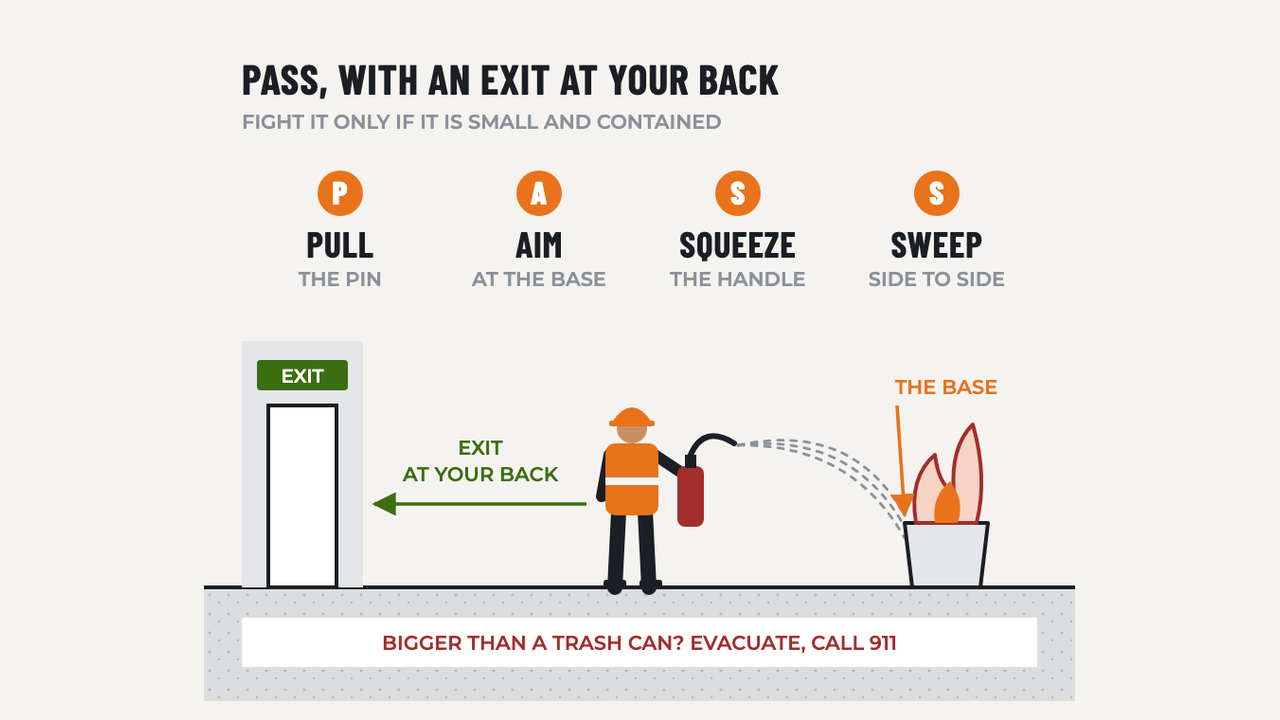
- PASS: Pull the pin, Aim at the base, Squeeze, Sweep side to side
- A used or discharged extinguisher gets reported and replaced immediately — an empty on the wall is a lie
Fight or Flee
- Fight only if: the fire is small and contained, your back is to an exit, and you have the right extinguisher
- Anything bigger than a trash can, spreading, or making heavy smoke: evacuate, alert everyone, call 911, meet at the muster point
- Know today's muster point and headcount plan before you need it
Key takeaways
- Fuel and ignition stay separated — housekeeping is fire prevention
- Hot work: 35-foot clearance, fire watch, 30 minutes after
- Know your extinguisher locations today
- PASS, aimed at the base, back to an exit
- Small and contained or you don't fight it
- Report every fire and every used extinguisher
Questions for your crew
- Keep fuel and ignition apart: approved safety cans, closed and stored away from ignition, and debris cleared — housekeeping IS fire prevention.
- Hot work needs combustibles cleared 35 feet or shielded, an extinguisher within reach, and a fire watch during and 30 minutes after.
- Sparks travel through wall gaps and land floors below — check the other side before cutting or welding.
- Know where the extinguishers are on THIS site — walk it today.
- PASS: Pull the pin, Aim at the base, Squeeze, Sweep — and only fight a fire that's small, contained, with your back to an exit.
- Anything bigger: evacuate, alert everyone, call 911, meet at the muster point — and report every fire and every used extinguisher.
Run this talk with crew sign-offs
This talk is part of the Safirst ONE toolbox talk library, in English and Spanish. Your foreman picks the talk in the app, the crew signs from their own phones by scanning a QR code, and the signed record files itself in your Docs Locker. Talk to Safirst to get it for your crews.