Construction crews take shortcuts because nobody planned for that day’s hazards, not because they stopped respecting the rule. The lift breaks, the pour runs behind, and "just this once" goes unanswered. Nobody closes it with a plan, so the shortcut quietly becomes the standard. A stricter write-up won’t fix that. A real plan for the day will.
Tie off. Always. Your foreman says it every morning, and he means it.
Then the lift goes down. The pour is behind. For twenty minutes, nobody on that edge ties off. Nobody says a word.
I’ve walked enough jobsites to tell you that silence is not defiance. Every guy on that deck knows the rule. What none of them have is an answer to the question that actually came up at ten o’clock: what do we do when the lift breaks?
Why does ‘just this once’ turn into every day?
"Just this once" turns into every day because nothing happens after it. The crew skips a step to beat a delay, the work gets done, nobody gets hurt, and nobody brings it up. That silence reads as permission, so the next delay gets the same answer, faster.
Crews aren’t anti-safety. They rationalize the shortcut as something they only do "when needed."
But when there’s no plan, "when needed" turns into always.
Here’s how the drift usually runs on a job:
- The first time is a real emergency. Equipment down, concrete truck waiting, the GC on the phone.
- The second time there’s a reason, but a smaller one. The crew remembers the first time worked out fine.
- By the third or fourth time, it’s just how that task gets done. A new guy joins and learns the shortcut as the method.
Notice what’s missing at every step. Not respect for the rule. A decision, made ahead of time, about what the crew does instead.
Is this a crew attitude problem — or a missing plan?
In most cases I see, it’s a missing plan. An attitude problem shows up on easy days too. A planning gap shows up on the bad days: the broken lift, the late material, the wind, the pour that can’t wait.
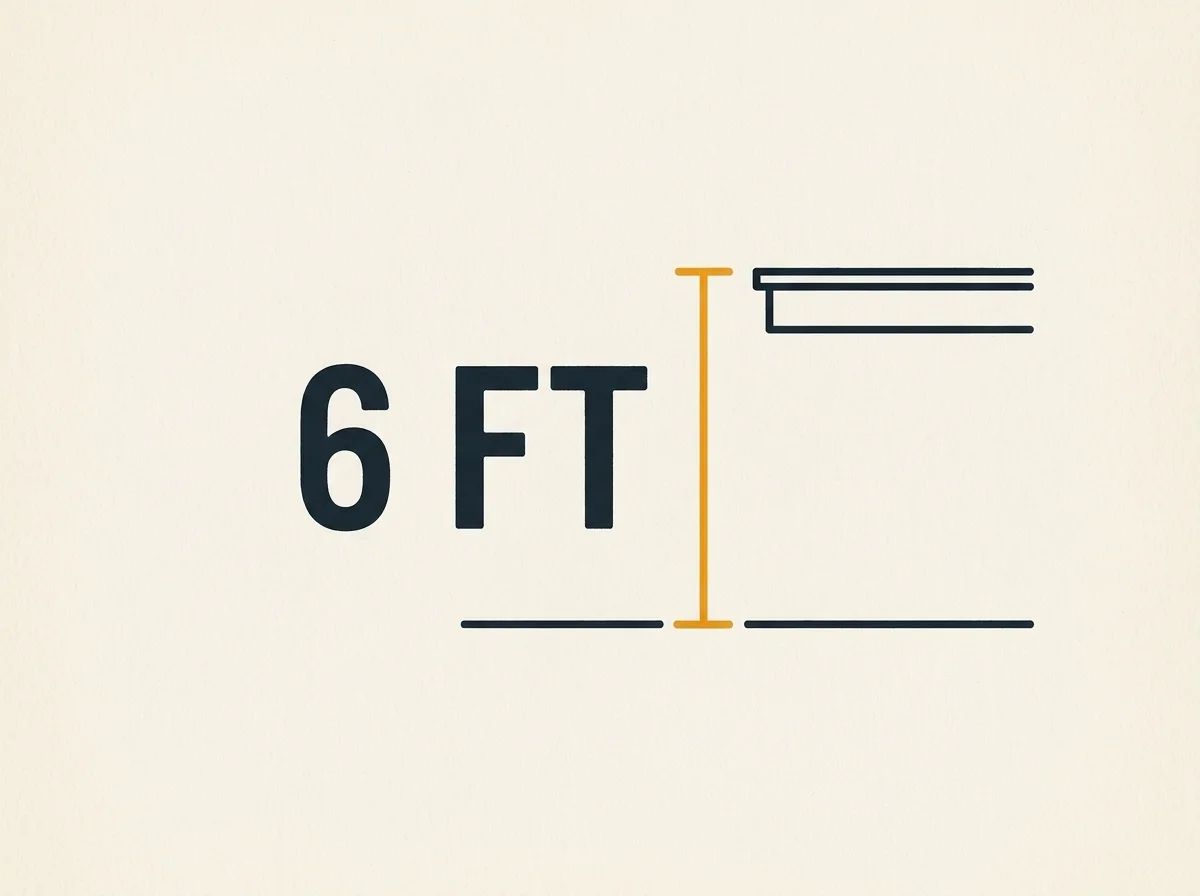
The rule itself doesn’t bend for a bad day. Under 29 CFR 1926.501(b)(1), each employee on a walking/working surface with an unprotected side or edge 6 feet or more above a lower level must be protected by a guardrail system, a safety net system or a personal fall arrest system. That trigger height is the same at the start of the shift and in the middle of a delay.
Your crews have heard that rule. Under 29 CFR 1926.21(b)(2), the employer has to instruct each employee in the recognition and avoidance of unsafe conditions. Training teaches the rule. It doesn’t tell the crew what Plan B looks like when today goes sideways.
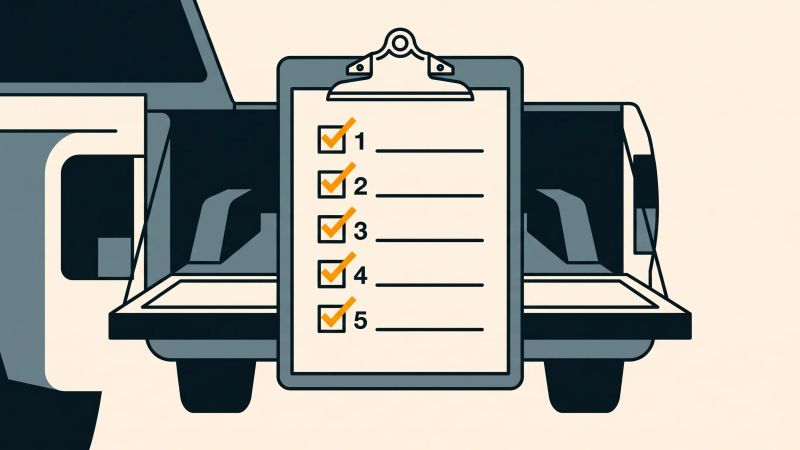
That’s the foreman’s job before the first task. A plan for today’s hazards answers five questions out loud, with the crew:
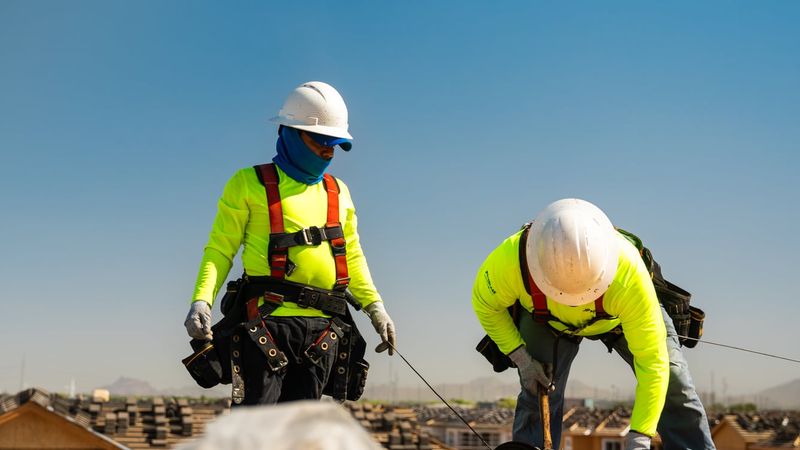
- Where is today’s highest exposure? Name the edge, the opening or the height, and whether it’s over the 6-foot trigger.
- How does every man get protected there? Count anchor points against the number of guys working that edge.
- What’s Plan B if the lift, the crane or the material is late? Decide it now, while nobody is under pressure.
- Who can call stop work? Say the names. A guy who isn’t sure he’s allowed to stop the job won’t.
- What do we do if we fall an hour behind? The answer should never be "skip the step." Write down what it is.
That takes minutes, not an hour. If your crew needs a refresher on the gear side, our personal fall arrest systems toolbox talk is a good one to run the same morning.
What’s really happening when a foreman looks the other way?
A foreman who looks the other way is usually intimidated, not careless. He knows how his guys will react if he stops the job over a twenty-minute shortcut, and he knows the schedule pressure is coming down on him from above. So he stays quiet, and the crew learns from his silence.
I don’t blame him for that. He’s standing by himself.
Look at the difference a plan makes for that man. A foreman enforcing a plan the crew built at 6 a.m. is holding his guys to their own word. A foreman inventing a rule at 10 a.m., in the middle of a delay, is picking a fight he’s going to lose.
The plan gives him something to point at. "We said if the lift went down, we’d move to the east side and set the second anchor first. That’s what we’re doing." No lecture. No OSHA language. Just the crew’s own decision, held.
That’s leadership practice, not enforcement. Getting the crew to own that standard alongside him is its own subject, which our upcoming guide on crew safety buy-in in construction takes on in full.
Why does more discipline make shortcuts worse, not better?
More discipline pushes shortcuts out of sight instead of out of the job. Crews don’t resist safety. They resist feeling blamed. Write a guy up for a shortcut nobody planned around, and the lesson he takes home is to make sure he doesn’t get caught next time.
Then the information stops flowing. Hazards stop getting reported. The near miss on Tuesday never reaches you, so it never reaches Wednesday’s plan either.
The stakes are real, and I won’t pretend otherwise. OSHA’s 2026 maximum for a serious violation is $16,550, and OSHA’s 2026 maximum for a willful or repeat violation is $165,514. OSHA’s penalty page lists those as the maximum amounts that may be assessed after Jan. 15, 2026.
Those numbers are why some companies reach for the write-up. Honestly, I think it’s the wrong reflex. A drawer full of write-ups shows you knew the shortcut was happening. It doesn’t show anybody planned to stop it. For what your own documentation needs to hold up, consult your safety professional.
The ROI I care about first is life safety. Families intact. Reputation intact. The dollars come after that.
When is a shortcut not a planning problem?
Sometimes it isn’t a planning problem, and I’d be lying if I said a plan fixes everything. Three cases where the morning plan won’t carry the load:
- The gear isn’t there. If you’ve got one anchor and eight guys on the edge, no huddle solves it. That’s a purchasing and sequencing decision, and it belongs to whoever runs the job, not the foreman.
- The guy has been planned for and still refuses. You built the plan with him, gave him the gear and the time, and he still won’t tie off. That’s a real conduct issue, and corrective action belongs there.
- The schedule itself is the hazard. If the GC’s sequence makes the plan impossible to keep, the conversation has to go up the chain, not down to the crew.
One more honest limit. What I’m telling you comes from field observation across our client jobsites, not a controlled study. I’ll stand behind it, but I’m not going to dress it up as research.
Run the plan on every crew, every day
One foreman running one plan with one crew is easy to picture. Twelve crews across four jobs is a different animal. Somebody has to make sure every plan got made, every hazard report got heard, and every acknowledgment got filed before an inspector asks.
That’s a team’s worth of work, and most contractors run it off one person and a truck full of paper. Safirst ONE is how foremen pre-plan daily operations, crews report hazards without fear, and leaders build safety culture at scale, so your people spend their time on the conversation instead of the filing.
Tomorrow morning, before the first task, ask your foreman one thing: what’s our plan when the lift breaks? Whatever he can’t answer is the shortcut you’ll see at ten o’clock.
Frequently asked questions
Because OSHA 10 builds awareness, not a plan for today. OSHA says the 10-hour class is intended to give workers awareness of common job-related hazards, and that the Outreach program is voluntary and does not meet the training requirements for any OSHA standard. Your guys can know the rule cold and still skip it when the day goes sideways and nobody decided ahead of time what to do instead.
It can, and the price is steep. OSHA’s 2026 maximum for a willful or repeat violation is $165,514 per violation, according to osha.gov/penalties. How a citation gets classified is OSHA’s call, based on what its inspection finds. A shortcut the whole crew has watched for weeks looks a lot less like a one-time slip. For your situation, consult your safety professional.