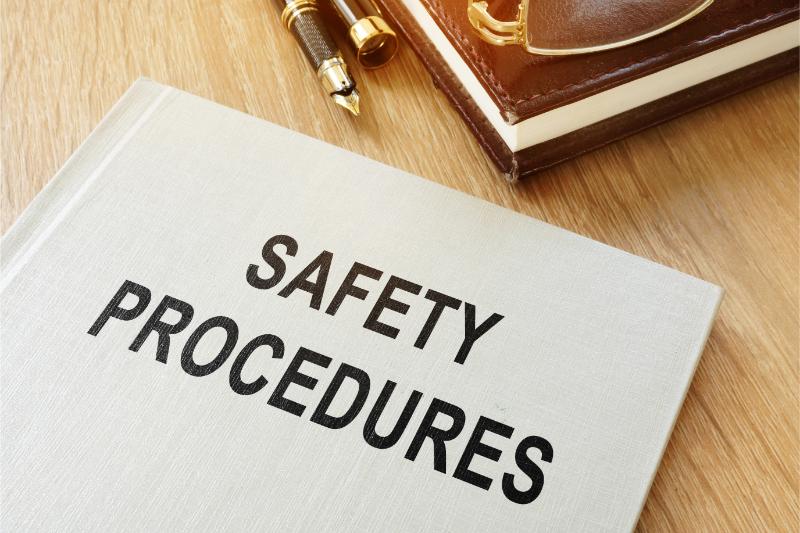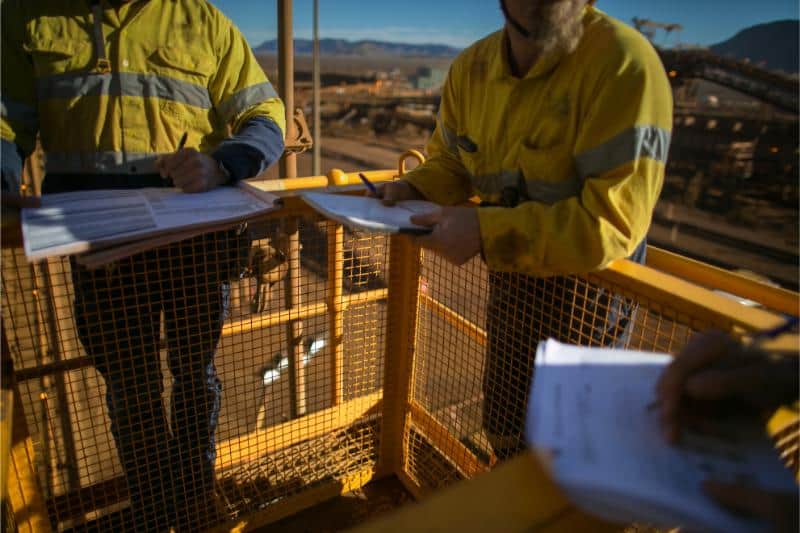
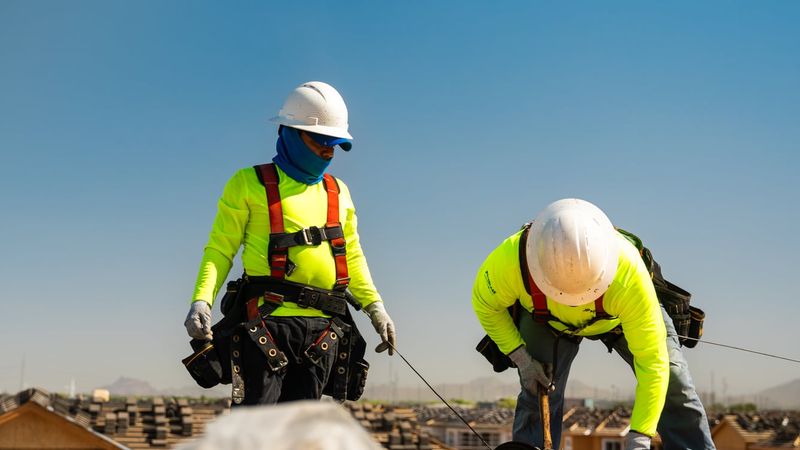
Compliance proves a safety standard exists. Culture decides whether a foreman can hold that standard at 7 a.m. with his own crew watching. Both get called safety. Only one of them lives in a binder. On a Phoenix job I was inspecting, the tie-off rule existed and nobody thirty feet up was tied off.
Two instruments. Two different readings. Most contractors only own one of them.
You can score a perfect audit and still have nobody on that deck willing to say stop.
What’s the Real Difference Between a Safety Culture and a Compliance Program?
A compliance program is the documented proof that a standard exists and was communicated: written rules, training records, signatures, retention. A safety culture is whether that standard gets held when holding it costs somebody time, money, or standing with his crew. One is auditable from a desk. The other only shows up in what people do when nobody is checking.
OSHA writes the paper side in plain language. As of the 2026 code, 29 CFR 1926.21(b)(2) says "The employer shall instruct each employee in the recognition and avoidance of unsafe conditions and the regulations applicable" to his work environment.
For fall protection it gets specific about the artifact. As of the 2026 edition of the code, 29 CFR 1926.503(b)(1) requires a written certification record, and names the fields it has to carry: "the name or other identity of the employee trained, the date(s) of the training, and the signature of the person who conducted the training or the signature of the employer."
Three fields. An inspector reads them in ten seconds.
Every one of those is a document. Not one of them is a behavior.
Now watch the agency test the other axis, inside the same book. In the 2026 code, 29 CFR 1904.35(b)(1)(i) requires a reasonable procedure for employees to report injuries and illnesses. Then it adds the actual test: "A procedure is not reasonable if it would deter or discourage a reasonable employee from accurately reporting a workplace injury or illness."
Read that again. The standard is not whether you wrote a procedure. It is whether a normal guy on your crew feels free to use it.
That is a culture rule sitting in the middle of a recordkeeping regulation. Even OSHA knows the document is not the thing.
| What a compliance program measures | What a safety culture measures |
|---|---|
| The rule exists in writing | The rule gets said out loud before work starts |
| The training happened and is signed | The training changes what a man does at 2 p.m. |
| The hazard got corrected before your walk | The hazard gets reported before anybody walks |
| Whether you can prove it to an inspector | Whether a foreman can hold it in front of his guys |
Same jobsite. Two scores. They move independently, and that is the part most programs never account for.
Can a Crew Be Fully Compliant and Still Not Be Safe?
Yes, and it is the ordinary case rather than the exception. Our inspectors logged 825 fall protection violations across 95 Arizona contractor clients between August 2025 and August 2026. 29 CFR 1926.501(b)(1), as of the 2026 code, applied at every single one of them. The rule existing on paper explained none of them.
That standard is not buried. It calls for protection at "6 feet (1.8 m) or more above a lower level," by guardrail systems, safety net systems, or personal fall arrest systems.
No foreman in Arizona is fuzzy on six feet.
Here the state plan matters, because your inspector is not federal OSHA. Under A.R.S. 23-401, Arizona’s enforcement arm is the "division of occupational safety and health within the commission." Out here everybody calls it ADOSH.
As of 2026, A.R.S. 23-410(A) has that division "propose adoption of national consensus standards or federal standards or draft such rules as it considers necessary." The state adopts the federal book instead of writing a separate one, so the CFR numbers above are the ones in play on a Phoenix job.
Your general duty, though, is Arizona statute. A.R.S. 23-403(A) requires each employer to furnish employment and a place of employment "free from recognized hazards that are causing or are likely to cause death or serious physical harm to his employees."
Sit on the word recognized. It points at what people on your job actually know. A training file cannot answer that question. A foreman standing in front of the crew can.
So the knowledge was there and the exposure happened anyway. That is what a compliance-only program cannot see. It is built to confirm the standard was issued, and every one of those findings had an issued standard behind it.
It runs the other direction too, and this is the part safety people like less. A crew with real culture and lousy records still fails. Your culture does not survive a document request. 1926.503(b)(1) does not become optional because your guys are good.
So you need both columns, and you need to stop reading one of them as a proxy for the other. A clean audit is a floor. Nothing more than that.
Where the standard actually gets set on a given day is the ten minutes before the first task, and I laid that out already in a piece on what the pre-work huddle is really for. That one has not posted yet, so I will not run it again here.
Why a crew talks itself into a shortcut, and how you earn buy-in instead of demanding it, are two separate articles. Neither one is published yet.
Why Did the Rule Already Exist and Still Fail on That Roof?
Because the rule was never the missing piece. Doing an inspection in the middle of Phoenix, I saw a crew working the exterior top plate thirty feet in the air. None of them were tied off. The tie-off standard was in force that morning. The foreman’s ability to enforce it was not.
I stopped the work.
Everybody expects the same script after that. Yelling, write-ups, document it, move on.
That’s not how Safirst operates.
I pulled the foreman aside and we talked. We didn’t talk about the OSHA language. We talked about the standard he held for himself and his crew, and how he could enforce that standard every day.
He told me he was intimidated. Too intimidated to enforce the rule, because he knew how his guys would respond.
Sit with that. His paperwork was fine. His problem was a conversation he did not believe he could survive.
If your crew isn’t tied off safely, that’s not a crew problem. That’s a leadership problem.
Here is the piece no form on that job could have caught. Every compliance box was checkable — what was not on any form was whether one man could say the word stop to the guys he eats lunch with.
Call that STANDING. It is a foreman’s ability to hold a rule in front of the people it inconveniences, and it is the entire culture axis in four words.
The fix was not discipline. It was taking the fear out and flipping the power structure, so the crew holds the standard too and the foreman is not out there alone with it.
The math on that is life safety first. Families intact. Reputation intact. Dollars after those.
If Your Compliance Score Is Fine, Where Do You Actually Start on Culture?
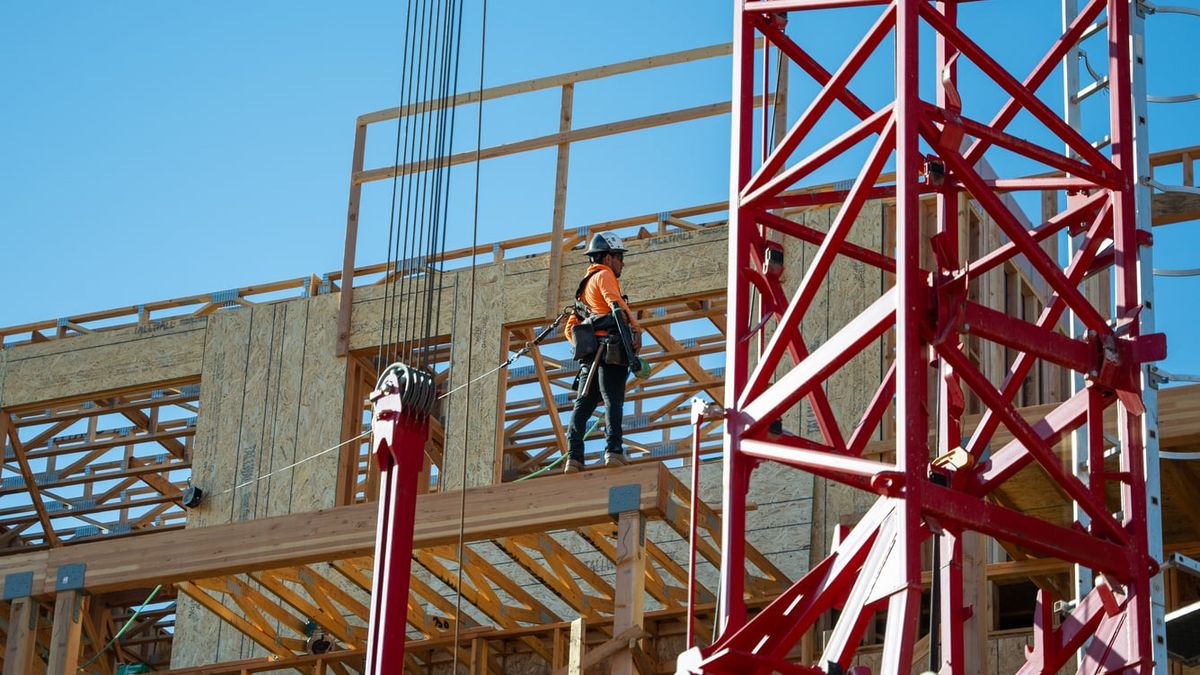
Start by scoring both axes separately, on one job, this week. The paper column takes an hour and you will probably pass it. The standing column takes four questions asked of the crew instead of the foreman, and it is the one that will surprise you. Run them in that order.
- Score the paper on your top hazard. Pull the written rule and the training certification. 1926.503(b)(1) hands you the fields to check: name or identity, training dates, signature. Current and complete is a pass. Most of you pass.
- Ask three task-level employees who stopped work here last. Not the foreman. One question each, ninety seconds a man. If nobody can name a stop-work in the last 90 days on an active job, nothing is getting stopped on that job.
- Ask what happened to that man afterward. This is the real question and it is the one nobody puts on a form. If the answer involves anybody getting embarrassed, sent home early, or moved to a worse crew, you have your culture score.
- Run your reporting path against OSHA’s own test. Have a guy walk you through what happens after he reports a hazard. Then read 1904.35(b)(1)(i) again. If his description would deter a reasonable employee, your written procedure is not your actual procedure. 29 CFR 1904.36, as of the 2026 code, adds that "section 11(c) of the OSH Act also prohibits you from discriminating against an employee for reporting a work-related fatality, injury, or illness."
Score each column out of five and write down both numbers. Two numbers, never one.
A five on paper and a one on standing is the jobsite this whole article is about. It is also the jobsite that reads as green on every dashboard you own.
Then fix the second number at the foreman level, not the crew level. Your crew is following somebody. Go ask that somebody what it would cost him to hold the line here, and then go remove that cost. The daily version of that removal is the ten minutes at the tailgate before the first task.
That last part is the work. Everything before it is measurement.
Where a Culture Push Backfires
Culture language with no authority behind it leaves a foreman worse off than silence did. Ask a man to hold a standard, then overrule him the first time it costs the schedule, and you have taught his crew exactly what your standard is worth. Answer the authority question before you ask for the commitment.
Do not trade the records for the conversation either. An inspector does not read your culture. The paper is the part that survives, and keeping it is a legal duty that no amount of trust discharges.
One caveat on my evidence, honestly, before you take this to twenty crews. What I have is field observation across our Arizona client base and one year of coded inspection findings. Not a controlled study tying culture work to a TRIR movement. Take it as what it is.
And none of this is legal advice about your program. What you owe, how fast you abate it, and what you keep on file: consult your safety professional.
Start With the Question Your Audit Can’t Ask
Pick the foreman you would least want to lose. Ask him what it costs him, personally, to stop work on your job.
Then be quiet and let him answer.
Whatever he tells you is your culture score, and no audit was ever going to hand it to you.
Doing that once, on one job, is a Thursday afternoon. Doing it every month across every crew, with the certifications current, the training records tracked, and the paper ready the day somebody asks for it, is a full-time person you either hire or automate. Safirst ONE is how foremen pre-plan the day, crews report hazards without fear, and leaders build safety culture at scale, without adding a coordinator to payroll.
If you would rather start with a second set of eyes on one job, ask us out for a morning walk.
Your paper score will probably hold up fine. That was never the number I would worry about.