

A pre-work huddle’s job is not the hazard list. It is the one moment in the day a foreman says out loud which standard he will hold, in front of the guys who have to live inside it. Skip it, and every shortcut decision after seven o’clock becomes one man’s private call.
A pre-work huddle is the short meeting a foreman runs with his crew before the first task, to set the day’s plan. Ten minutes, at the truck, standing up.
Gear is off the truck and the first man is already up the ladder. Nobody has said a word about the plan. That is not urgency. That is the huddle that did not happen.
Most programs measure the huddle by whether it happened and how long it took. Neither of those changes what a man does at two in the afternoon.
Your crew can recite the hazards. That has never been the part that fails.
What Is a Pre-Work Huddle Actually Supposed to Change?
A pre-work huddle changes who owns the safety standard for the next ten hours. Before the huddle, that standard lives in a binder and belongs to the safety department. After it, the foreman who signs the crew’s time has said the standard out loud, in front of witnesses. That transfer is the whole product.
I have argued before that a clean audit and a safe crew are not the same jobsite. The huddle is where the second one gets built, and it takes about ten minutes.
Read the construction standards and you notice a pattern. OSHA keeps writing daily obligations, and it keeps attaching them to a person instead of a form.
Excavations: 29 CFR 1926.651(k)(1) says “Daily inspections of excavations, the adjacent areas, and protective systems shall be made by a competent person.”
Scaffolds: 29 CFR 1926.451(f)(3) requires they be “inspected for visible defects by a competent person before each work shift, and after any occurrence which could affect a scaffold’s structural integrity.”
The program-level rule says the same thing about your whole job. 29 CFR 1926.20(b)(2): “Such programs shall provide for frequent and regular inspections of the job sites, materials, and equipment to be made by competent persons designated by the employers.”
Designated. On a clock that resets every shift.
Now read who that person is supposed to be. 29 CFR 1926.32(f) defines a competent person as one capable of identifying “hazards in the surroundings or working conditions which are unsanitary, hazardous, or dangerous to employees, and who has authorization to take prompt corrective measures.”
Two halves. The trade staffs the first half hard and mostly forgets the second.
You can send a foreman to competent person training and never actually give him the authorization. The certificate covers the identifying. The AUTHORIZING is the part nobody hands you in a classroom.
The huddle is where it gets handed over, out loud, in front of the people it applies to.
Why Do Foremen Skip It Even When They Already Know the Hazards?
Foremen skip the pre-work huddle for two reasons, and only one of them gets talked about. The hazard recitation carries no new information, so it gets cut first on a busy morning. The harder reason is that a real huddle asks a foreman to commit in public to a standard he is not sure his crew will let him hold.
- Nothing in a hazard recitation is news. Reading the JHA back to men who ran the same task yesterday feels like proving something instead of deciding something. Schedule pressure kills it by Wednesday.
- A public commitment can be called on. Once a foreman names the standard out loud, every man on that crew knows exactly what he said, and he owns it at two in the afternoon when the push comes.
That second one is not a character problem.
I called a stop-work on a Phoenix job earlier this year, and I wrote it up in a piece on why ADOSH violations aren’t random. That one hasn’t posted yet. The scene is not the part worth repeating here. What the foreman told me afterward is. He was intimidated. Too intimidated to enforce the tie-off rule, because he knew how his guys would respond.
He was not describing a careless crew. He was describing a man standing out there by himself.
If your crew isn’t tied off safely, that’s not a crew problem. That’s a leadership problem.
A foreman alone will hold a standard for a while. He will not hold it every morning for a year.
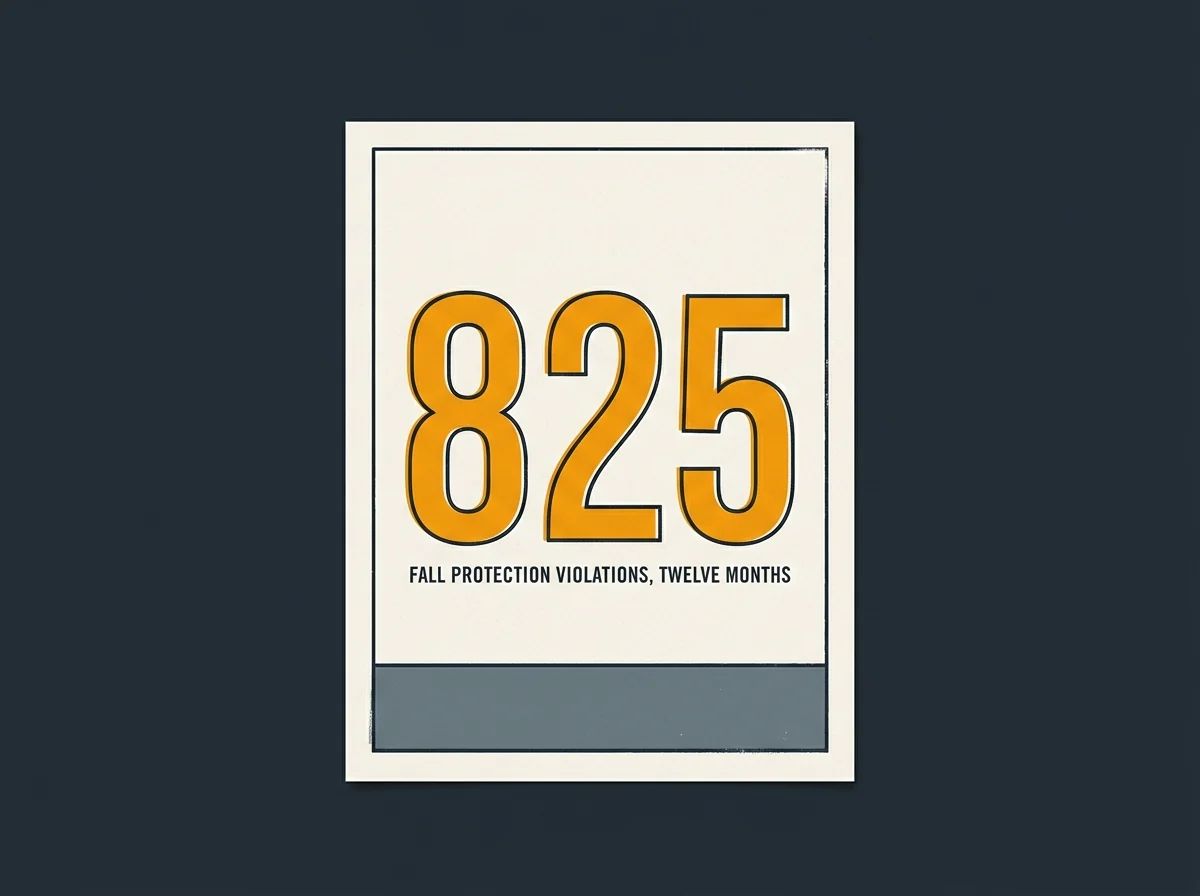
Our inspectors logged 825 fall protection violations in the twelve months ending August 2026, spread across the 95 Arizona contractors we serve. That is not 825 men who forgot a number — it is a few hundred ordinary mornings where nobody set the standard out loud first.
The usual fix for a skipped huddle is an attendance sheet and a supervisor spot-check. I disagree with that fix. It adds a witness to the foreman’s performance without adding anybody to his side.
You do not get a man to commit in public by auditing whether he commits in public.
What moves it is the person above him saying the same standard first, in the same week, where the foreman can hear it. Standards run downhill. So does silence.
What Turns ‘We’ll Handle It If It Comes Up’ Into Every Single Day?
A shortcut turns into the daily default through repetition with nothing pushing back on it. A crew cuts a corner once under schedule pressure, nobody names it, and inside about a week it stops being the exception. “When needed” turns into always, because there was never a plan that said what needed looks like.
Crews are not anti-safety. They are running a rationalization that nothing in the day disputes.
OSHA already assumes your crew’s training goes stale. 29 CFR 1926.503(c)(1) requires retraining when “Changes in the workplace render previous training obsolete.”
Go look at what changed on your job since Monday. A new elevation. A second trade stacked on the same deck. Anchor points that moved because the crane picks moved.
That is a changed workplace, five days in. The retraining rule is written for the big version of that. The huddle is where you catch the small version, every morning, at no cost.
The fall protection plan carries the same tell. 29 CFR 1926.502(k) requires a plan “developed specifically for the site where the leading edge work, precast concrete work, or residential construction work is being performed and the plan must be maintained up to date.” The same paragraph adds that “The implementation of the fall protection plan shall be under the supervision of a competent person.”
Supervision is a live verb. A plan nobody has spoken since the preconstruction meeting is not being supervised. It is being stored.
So name the temptation before it arrives. Not the hazard. The temptation.
“We are two men short today. The anchor on the east side is not set until ten. If you get to that edge before it is set, you stop and you call me.”
That sentence takes eleven seconds. It also takes the private call away from the guy standing on the deck at 9:40.
What Does a Foreman Owe the Crew Before the First Task Starts?
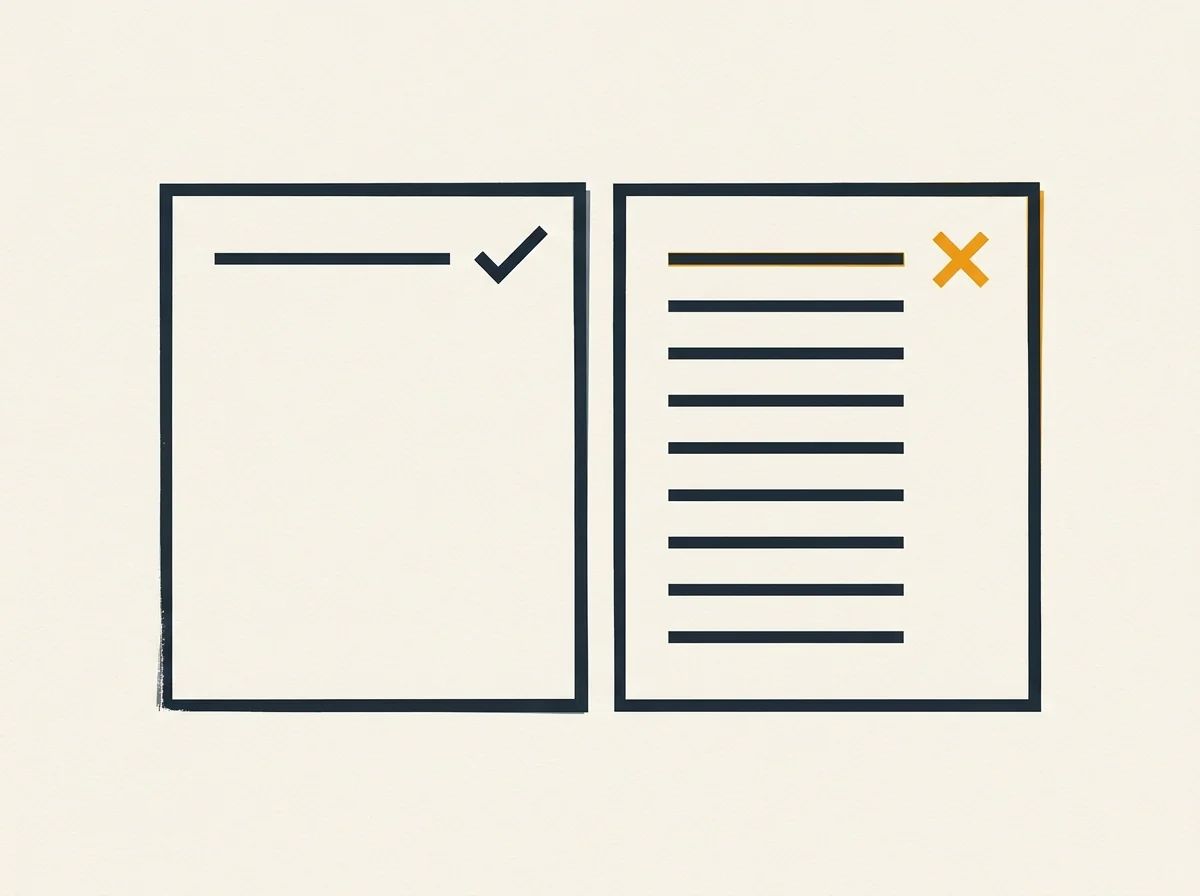
A foreman owes his crew four things before the first task starts, and none of them is the full hazard list. Name the one task today that can kill somebody, and where it is. State the standard as what you will do, not what the rule says. Name what will make skipping it tempting. Say who to call, and what happens when they do.
- The one task, by location. Not “fall protection today.” Say “the east elevation, second floor edge, from about nine until the deck is closed.” A crew can carry one hazard in its head all day. It cannot carry nine.
- The standard as your own commitment. “Nobody goes past that edge without a lanyard on. If the anchor is not set, we wait for me.” The rule already existed yesterday. What did not exist was you saying what you will do about it.
- The temptation, out loud, in advance. Schedule, weather, missing equipment, the man who is short. Whatever will make the shortcut feel reasonable at two, say it at 6:45 while nobody is under pressure yet.
- The permission, with a name attached. Who to call, and what does not happen afterward. The reporting permission structure is its own subject and I have written it out elsewhere. In the huddle it needs about one sentence.
Then close the loop at the end of the day. One line from the foreman: did the plan hold, and what changed. That is a better record than a signature sheet, because it says what actually happened instead of who stood near a clipboard.
If half your crew works in Spanish, the commitment gets made in Spanish too. A standard nobody understood was never set.
The Bureau of Labor Statistics counted 844 fatal falls, slips, and trips in 2024, down from 885 in 2023. Read that as a count of ordinary mornings, not disasters.
One bad step on a Tuesday. That is the whole distance.
Where This Argument Breaks on a Real Job
A huddle cannot deliver equipment that is not on the truck. If the anchors are not installed, you have just asked a foreman to promise something the job will not let him keep, and that costs him more standing than saying nothing would have. Answer the equipment question first, then ask for the commitment.
Do not let it become a signature hunt either. If the sheet turns into the point, your crew learns the sheet is the point, and you have rebuilt the binder standing up in a circle.
I also owe you the limit of what I am claiming. I do not have a controlled study telling you huddles cut incident rates by some percentage. What I have is field observation across our client base and a code that keeps naming a competent person on a daily cycle. Take it as that, not as proof.
And the practice does not retire the paperwork. 1926.20(b)(2) still wants those frequent and regular inspections documented against a designated person. The huddle changes the day. The record is the only version of the day that survives it. Records and culture are two different instruments. How a compliance score can climb for three years while the crew gets less safe is its own article, and it is coming.
I am not giving you legal advice about your program. What you owe, how fast you have to abate it, and how long you hold the paper: consult your safety professional on those.
Start Tomorrow With One Crew, Not Twenty
Pick the one foreman on your job who is already closest to running a real huddle. Not your worst one. Your closest one.
Stand in his huddle and do not run it. When he names the standard, back him in front of his guys, out loud, once. That is the entire intervention.
Then ask him Friday what it cost him.
How a foreman builds that standing over months is getting its own article, on foreman safety leadership. So is the one-page huddle sheet, with its fields and its end-of-day acknowledgment, and a piece on preventing OSHA citations without running your program off a penalty table. None of the three is published yet.
One foreman, one crew, one week, you can do yourself. Twenty crews every morning, with the acknowledgments, the retraining triggers, and the records landing somewhere an inspector can find them, is a full-time job you either hire for or automate. Safirst ONE is how foremen pre-plan the day and leaders grow that habit across teams, without putting another coordinator on payroll.
If you would rather have somebody standing next to you at 6:45 first, ask us out for a morning on one job.
Somebody on that deck makes the call about the edge at 9:40 tomorrow, whether you spoke or not. Make it first, out loud, at 6:45. Let’s go.