A free, ready-to-run toolbox talk for construction crews. Read it aloud at your morning huddle; it takes about ten minutes. Leer en español →
OSHA standard: 29 CFR 1926.25
At a glance
- A messy site is a hazard multiplier: trips, punctures, fires, blocked exits
- Clean as you go — not at the end of the week
- Every protruding nail gets pulled or bent, immediately
- Walkways, stairs, and exits stay clear, always
Introduction
Housekeeping sounds like the least serious topic in the safety library, and it causes some of the most common injuries on any site: trips over scrap, punctures from nail-studded lumber, strains from stepping around material piles, fires fed by accumulated debris. A clean site isn't about looking good for a walkthrough — it's the baseline that makes every other hazard easier to see. Today's talk is about making cleanup part of the work, not an afterthought.
Why It Matters More Than It Sounds
- Trips and falls on the same level are among the most common construction injuries — scrap, cords, and mud do it
- Debris hides real hazards: a covered hole, a protruding rebar, a live cord under the pile
- Piled combustibles turn a spark into a structure fire
- Cluttered escape routes cost seconds you may not have in an emergency
Clean As You Go
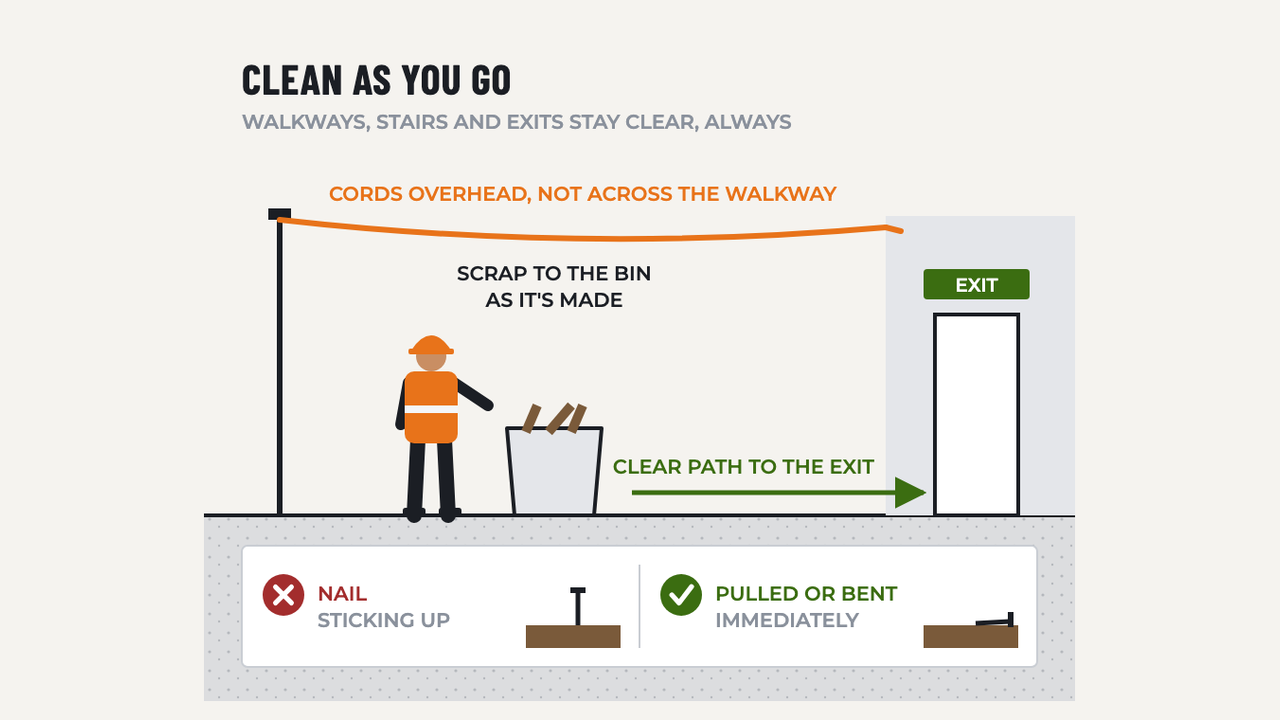
- Scrap goes to the pile or the bin as it's made — the "end of day" pile grows all day at ankle height
- Form and framing lumber: pull or bend over every protruding nail the moment the board comes off
- Cords and hoses routed along edges or overhead, not across walkways
- Spills — oil, water, concrete washout — get handled now, not flagged for later
Staging & Storage
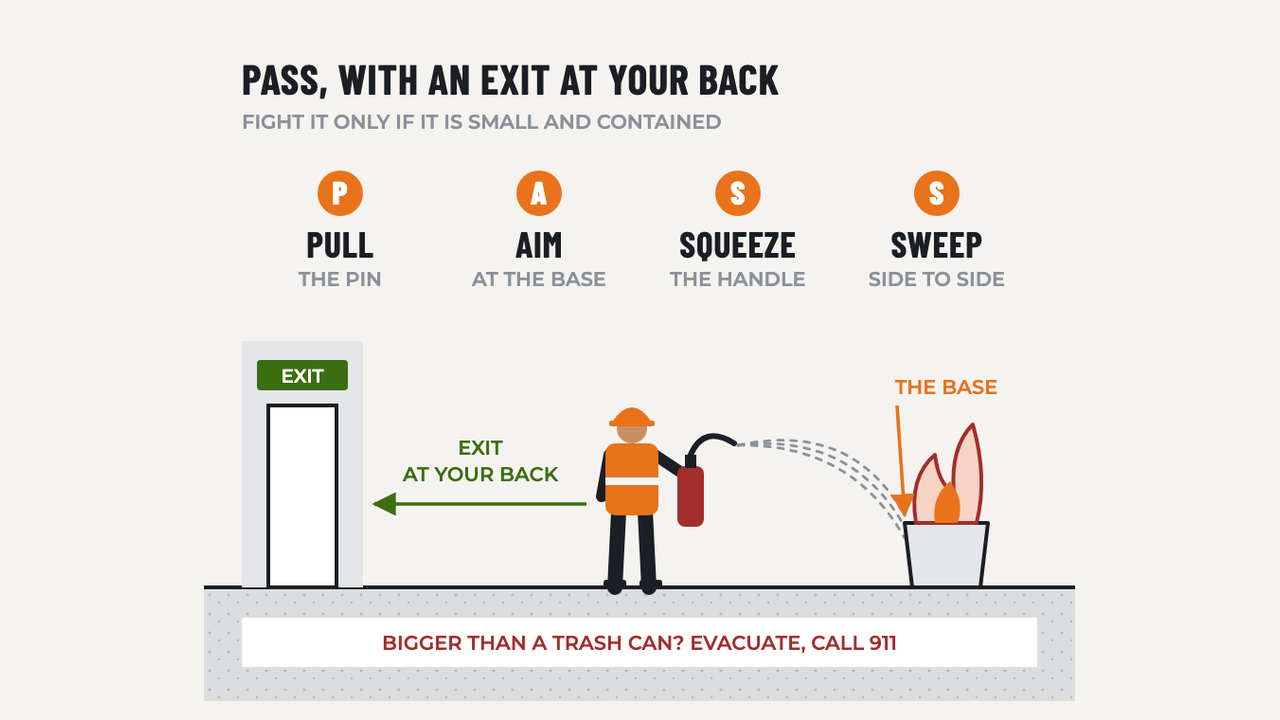
- Stage materials where they don't block walkways, exits, extinguishers, or electrical panels
- Stack stable and low near edges; nothing loose on leading edges or scaffold platforms
- Keep a clear path to every ladder, stair, and exit — check it after each delivery
- Waste separated and hauled regularly; overflowing bins mean the floor becomes the bin
Everyone's Job
- You made the mess, you own the mess — trade-to-trade courtesy keeps the whole site workable
- See a hazard you didn't make? Fix it if it's quick, flag it if it's not — walking past is a vote for the next injury
- Last person out of an area leaves it walkable
Key takeaways
- Clean as you go — the pile grows at ankle height
- Pull or bend every nail, immediately
- Walkways, stairs, and exits stay clear
- Cords and hoses out of foot traffic
- Debris hides hazards and feeds fires
- See it, fix it or flag it — don't walk past
Questions for your crew
- A messy site is a hazard multiplier: trips, punctures, fires, and blocked exits — and debris hides the hazards you need to see.
- Clean as you go — scrap goes to the pile or bin as it's made, not at the end of the day.
- Pull or bend over every protruding nail the moment the board comes off.
- Keep walkways, stairs, exits, extinguishers, and electrical panels clear — check after every delivery.
- Route cords and hoses along edges or overhead, never across walkways, and handle spills now, not later.
- See a hazard you didn't make? Fix it if it's quick, flag it if it's not — walking past is a vote for the next injury.
Run this talk with crew sign-offs
This talk is part of the Safirst ONE toolbox talk library, in English and Spanish. Your foreman picks the talk in the app, the crew signs from their own phones by scanning a QR code, and the signed record files itself in your Docs Locker. Talk to Safirst to get it for your crews.