A free, ready-to-run toolbox talk for construction crews. Read it aloud at your morning huddle; it takes about ten minutes. Leer en español →
OSHA standard: General Duty Clause 5(a)(1) · OSHA State Emphasis Programs: Heat
At a glance
- Heat kills — and it escalates fast
- Water, rest, shade: every hour, every crew
- New and returning workers are at highest risk
- Heat stroke = 911, cool first, never leave them alone
Introduction
Heat is one of the deadliest hazards on a jobsite, and it does not announce itself. By the time a worker feels "off," the damage is already underway. Most heat deaths happen in a worker's first week — many on the first day — because the body needs time to adjust. Today's talk covers how heat illness progresses, how to catch it early, and the routine that keeps a crew working through summer safely.
Why Heat Is Dangerous
- Your body cools itself by sweating — high heat plus exertion can outrun it
- Dehydration sneaks up: by the time you're thirsty, you're already behind
- Heat exhaustion can become heat stroke, a medical emergency, in minutes
- Heat also causes indirect incidents: dizzy workers on ladders, slowed reactions around equipment
Recognize the Signs
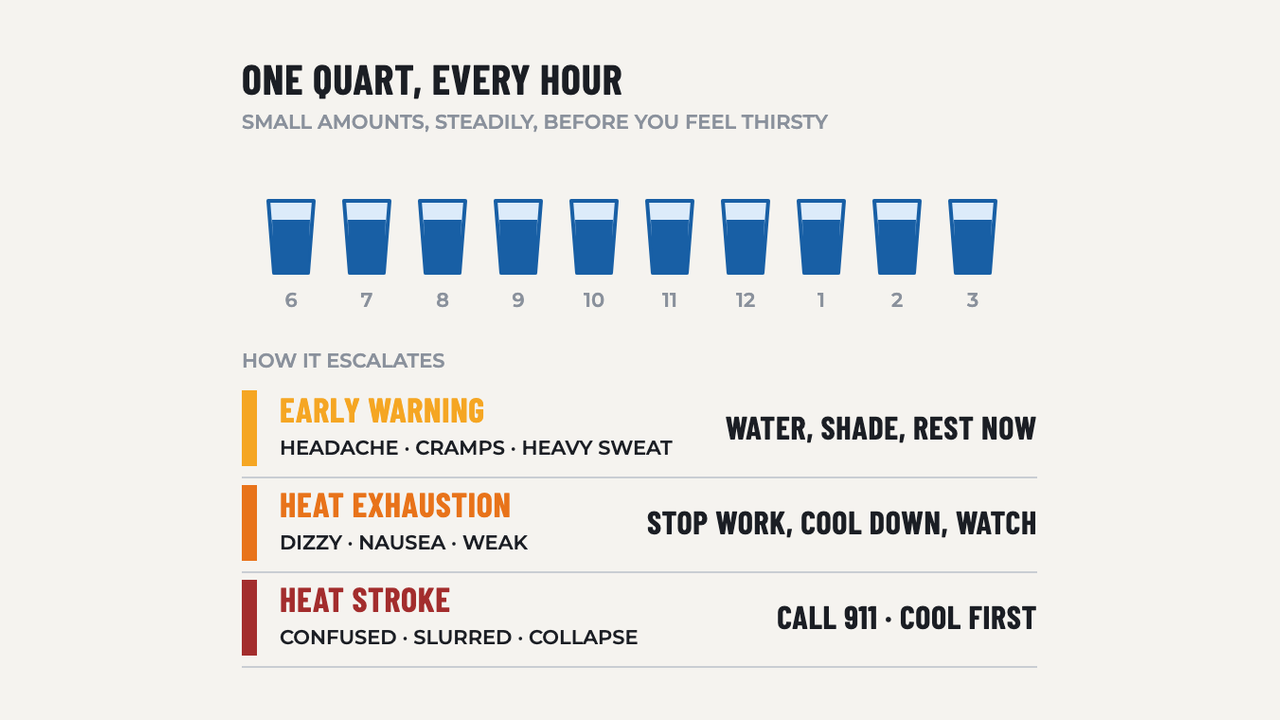
- Heat exhaustion — heavy sweating, headache, nausea, dizziness, cramps, weakness
- Heat stroke — confusion, slurred speech, hot dry skin OR profuse sweating, collapse, seizures
- Watch your crew: irritability, stumbling, or "zoning out" in the heat is a red flag, not laziness
- If someone seems off, act — do not wait for them to admit it
Water · Rest · Shade
- Drink about one quart per hour — small amounts, steadily, before you feel thirsty
- Water and electrolytes beat energy drinks and soda; skip alcohol the night before
- Take breaks in shade or AC before you feel bad, not after
- Schedule the heaviest work for early hours; rotate demanding tasks in the afternoon
New & Returning Workers
- Acclimatize: ramp up heat exposure over 1–2 weeks — new hires do NOT work full heat load on day one
- Coming back from vacation or sick days resets your tolerance — ramp again
- Supervisors: assign a buddy to every new worker during summer months
If Someone Goes Down
- Heat stroke is a 911 call — every minute matters
- Move them to shade, remove excess clothing, soak with water, ice the neck/armpits/groin
- Cool first, transport second — and never leave them alone
- Know your site address and nearest access point before the emergency
Key takeaways
- Heat illness escalates fast — catch it early
- One quart of water per hour, all shift
- Rest and shade before you feel bad
- Ramp up new and returning workers
- Confusion or collapse = 911 + cool immediately
- Look out for each other — heat hides itself
Questions for your crew
- Heat illness escalates fast — treat headache, dizziness, cramps, and heavy sweating as early warnings, not annoyances.
- Drink about one quart of water per hour, steadily, before you feel thirsty.
- Take rest breaks in shade or air conditioning before you feel bad, not after.
- Acclimatize new and returning workers gradually — most heat deaths happen in a worker's first week.
- Confusion, slurred speech, or collapse is heat stroke: call 911, cool the person immediately with water and ice, and never leave them alone.
- Watch your crew — irritability, stumbling, or zoning out in the heat is a red flag.
Run this talk with crew sign-offs
This talk is part of the Safirst ONE toolbox talk library, in English and Spanish. Your foreman picks the talk in the app, the crew signs from their own phones by scanning a QR code, and the signed record files itself in your Docs Locker. Talk to Safirst to get it for your crews.