A free, ready-to-run toolbox talk for construction crews. Read it aloud at your morning huddle; it takes about ten minutes. Leer en español →
OSHA standard: 29 CFR 1926 Subpart X (1926.1053)
At a glance
- Wrong ladder, wrong setup — that's how falls start
- 4-to-1 angle; 3 feet above the landing
- Three points of contact, always
- Never stand on the top two rungs
Introduction
Ladders are so common we stop thinking about them — and that's exactly when they hurt people. Most ladder falls come from the same few mistakes: the wrong ladder for the job, bad setup, or careless climbing. Every one of them is preventable in under a minute. Today's talk covers picking the right ladder, setting it up right, and climbing it like your life depends on it — because it does.
Pick the Right Ladder
- Match the duty rating to the worker plus tools — check the label
- Fiberglass near any electrical work — never aluminum around power
- Long enough that you never stand on the top two rungs of a stepladder or top four of an extension
- Inspect first: cracked rails, missing feet, bent rungs, loose hardware = tag it out
Set It Up Right
- Firm, level ground — no blocks, pallets, or dirt piles under the feet
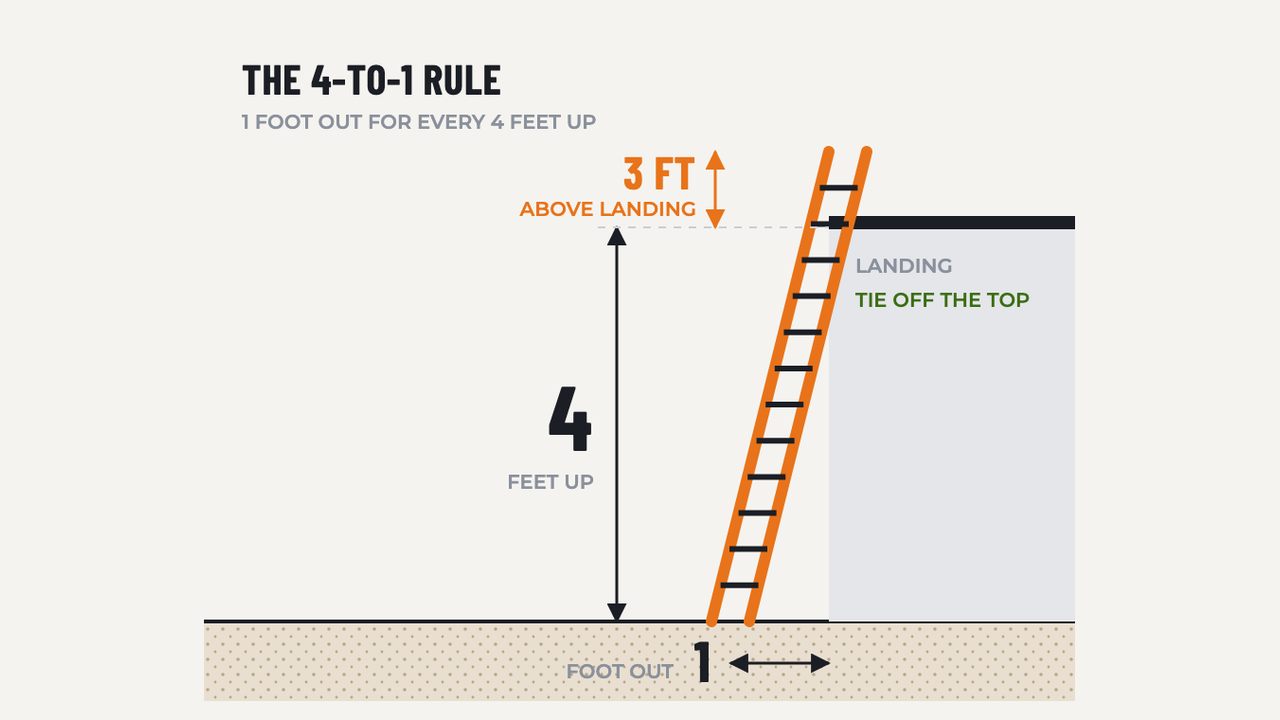
- Extension ladders: 4-to-1 angle (one foot out for every four feet up)
- Extend 3 feet above the landing surface and tie off the top
- Fully open stepladders with spreaders locked — never lean a closed stepladder
- Barricade or flag the base in walkways and near doors
Climb Right
- Three points of contact — two hands and a foot, or two feet and a hand
- Face the ladder going up and coming down
- Belt buckle between the rails: don't overreach, move the ladder instead
- Tools go up on a tool belt or hand line, never in your hands
- One person on a ladder at a time
Common Violations We See
- Standing on the top cap or top step of a stepladder
- Ladder too short for the task, set too steep or too flat
- Metal ladder within 10 feet of energized lines or equipment
- Damaged ladders still in circulation instead of cut up and scrapped
Key takeaways
- Inspect before use; destroy damaged ladders
- Fiberglass around electricity
- 4-to-1 angle, 3 feet above the landing, tied off
- Three points of contact, belt buckle between the rails
- Never the top two rungs
- A minute of setup beats a lifetime of injury
Questions for your crew
- Inspect ladders before each use — cracked rails, missing feet, or bent rungs mean tag it out and destroy it.
- Use fiberglass ladders around any electrical work, never aluminum.
- Set extension ladders at a 4-to-1 angle, extended 3 feet above the landing, and tie off the top.
- Maintain three points of contact and face the ladder going up and coming down.
- Keep your belt buckle between the side rails — move the ladder instead of overreaching.
- Never stand on the top two rungs of a stepladder or the top four rungs of an extension ladder.
Run this talk with crew sign-offs
This talk is part of the Safirst ONE toolbox talk library, in English and Spanish. Your foreman picks the talk in the app, the crew signs from their own phones by scanning a QR code, and the signed record files itself in your Docs Locker. Talk to Safirst to get it for your crews.