Toolbox Talks
Palm Trimming: Pole Saws, Fronds & Overhead Lines (Arizona) Toolbox Talk
Published · 3 min read

A free, ready-to-run toolbox talk for construction crews. Read it aloud at your morning huddle; it takes about ten minutes. Leer en español →
OSHA standard: General Duty Clause 5(a)(1) · 29 CFR 1926.416 · ANSI Z133
At a glance
- Power lines and palm trees grow together in Arizona — look up before the pole goes up
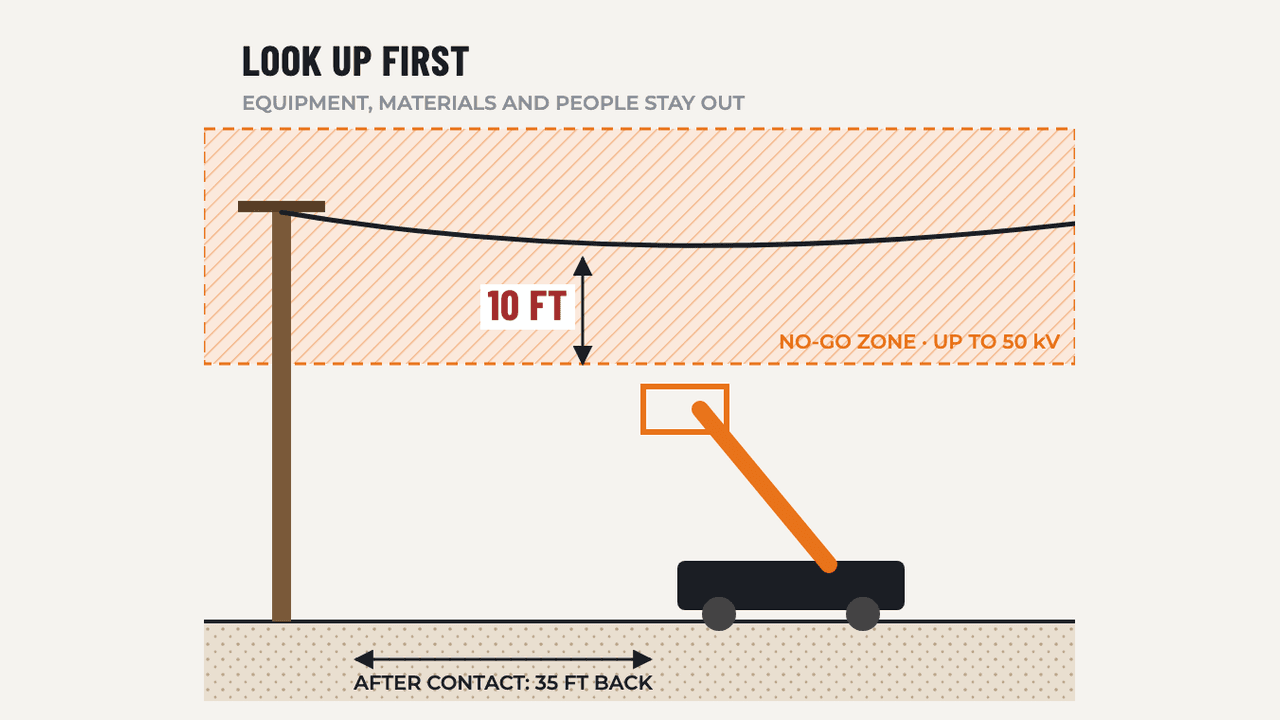
- 10 feet minimum from any line, and most pole saws are NOT insulated
- A skirt of dead fronds can weigh a thousand pounds and release as one piece — never work above or under it
- Fronds are heavy and spined: hard hats, eye protection, and a controlled drop zone
Introduction
Palm trimming kills workers in the Valley nearly every year, and almost always one of two ways: a pole saw or a falling frond meets a power line, or a climber gets into the skirt of dead fronds and it releases. Palms look like simple trees and they are not — the trunk is round and smooth with nothing to tie to, the dead fronds interlock into a skirt that holds enormous weight, and decades of Phoenix planting put palms directly under and beside distribution lines. Today's talk is the three things that decide how palm work ends: the line, the skirt, and the drop zone.
The Line Is the Killer
- Look up FIRST and plan the whole job around the line — where the pole will swing, where fronds will fall, where the ladder or lift will stand
- 10-foot minimum from any overhead line, measured from the TIP of the pole at full extension, not from your hands
- Most pole saws and pruners are aluminum or carbon fiber — conductive. Fiberglass is better, but nothing makes line contact acceptable
- A frond falling ONTO a line is contact too — palms overhanging or grown into lines are utility line-clearance work, never ours
- Anything inside 10 feet: stop and call the utility; only qualified line-clearance trimmers work closer
The Skirt Trap
- Dead fronds interlock into a hanging skirt that can weigh over a thousand pounds and hold years of loose material
- Never climb above the skirt and never work beneath it — when it releases, it slides down the trunk as one mass
- The documented deaths are suffocation: the skirt comes down over a climber and pins them against the trunk where rescue can't reach
- Tall or skirted palms get a boom lift or a specialty crew — climbing spikes under a heavy skirt is the fatal setup
- If the skirt shifts, cracks, or sheds while you're cutting: get out from under it and reset — never finish the cut from where you are
Fronds, Drops & the Ground Crew
- Green fronds run 20 pounds and more, with spines that punch through gloves — leather gloves and eye protection to handle them
- Barricade the drop zone before the first cut — cones and a ground person on any sidewalk, driveway, or street below
- Hard hats for everyone inside the zone; nobody stands looking up under a working saw
- Ladders and palms don't mix — round trunk, nothing to tie to. Work from the ground with a pole saw or from a lift
- Spine punctures get cleaned and reported, not shrugged off — palm thorn wounds infect deep and linger
Key takeaways
- Look up first; plan the job around the line
- 10 feet minimum — poles conduct, and falling fronds count as contact
- Palms in the lines are utility work, never ours
- Never above or under a frond skirt; a lift beats a climb
- Barricade the drop zone; hard hats inside it
- Gloves and eye protection on spined fronds; report punctures
Run this talk with crew sign-offs
This talk is part of the Safirst ONE toolbox talk library, in English and Spanish. Your foreman picks the talk in the app, the crew signs from their own phones by scanning a QR code, and the signed record files itself in your Docs Locker. Talk to Safirst to get it for your crews.