Safety Culture
Crew Safety Buy-In in Construction: Thank the First Report
Published · 10 min read

Crew safety buy-in in construction is earned the first time a guy reports a hazard and gets thanked for it. A better speech, a bonus, or tougher consequences won't buy it. A crew that nods at the morning meeting hasn't bought in yet. It has learned that staying quiet is the safe move.
Here's the test I use. A foreman tells me his guys are on board because nobody argues at the morning meeting. So I ask him one question: when did one of your guys last tell you about a hazard before it got him hurt?
Most of the time, he has no answer.
That silence is the whole problem. What you actually want is somebody walking up to you on a Tuesday to say "that edge isn't covered." You only get that after the first guy who does it walks away glad he did.
Why do my guys nod at the meeting and still skip the tie-off?
Your guys nod at the meeting because nodding costs them nothing, and they skip the tie-off because nothing about the meeting changed what happens on the deck at 10 a.m. A nod tells you the crew heard you. It doesn't tell you anybody will speak up when the plan falls apart.
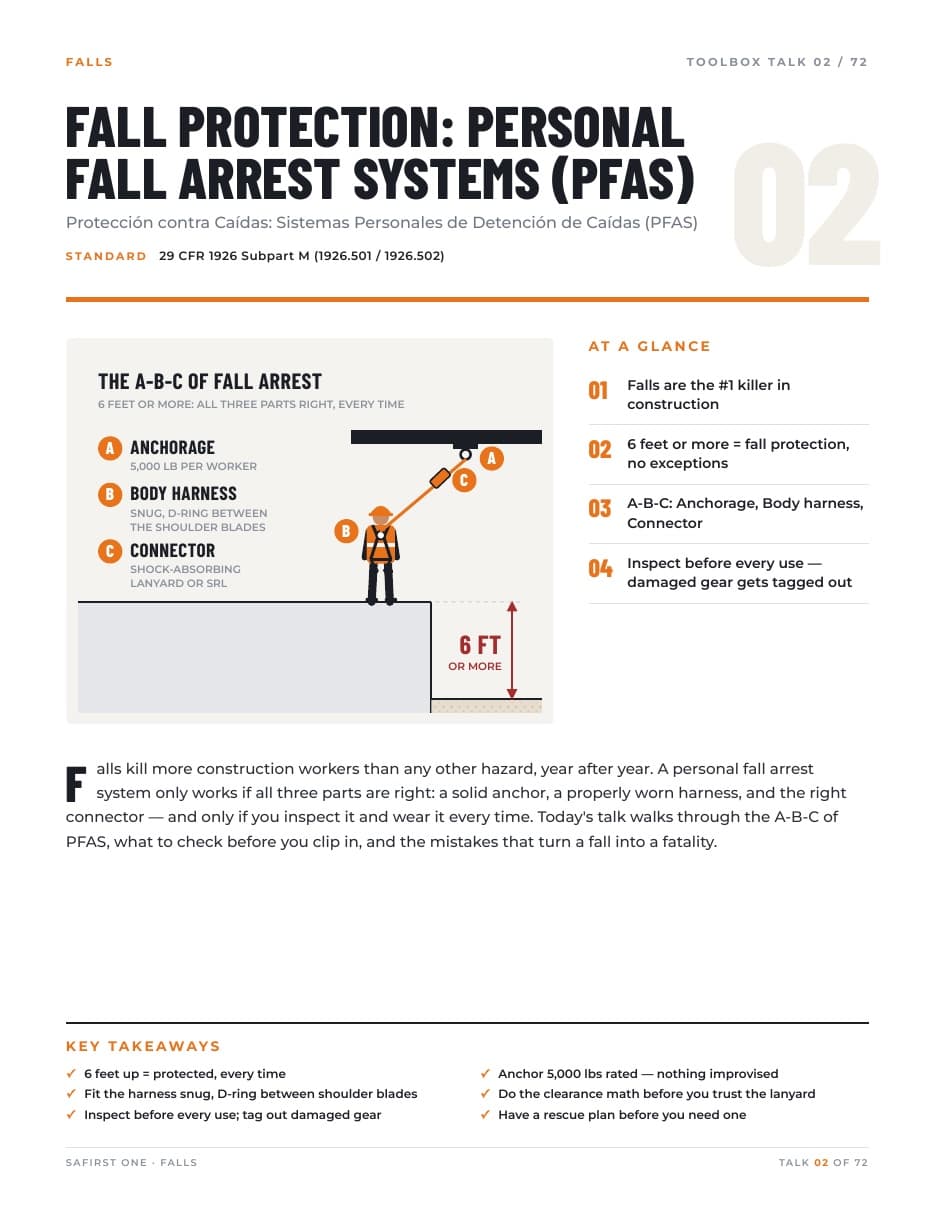
The crew already knows the rule. Every guy on your job knows six feet. Under 29 CFR 1926.501(b)(1), each employee on a walking/working surface with an unprotected side or edge 6 feet or more above a lower level has to be protected by a guardrail system, a safety net system, or a personal fall arrest system. Repeating that louder won't move anybody. I made the case for why the tie-off standard starts with the foreman holding it on himself in our guide to fall protection compliance for foremen.
Most owners reach for one of three fixes, and I've watched all three backfire. A better speech rewards listening, and your crew already listens. That's why they nod. A bonus for a clean month rewards a clean-looking month, and the quickest way to get one is to keep the near miss to yourself. A tougher consequence rewards not getting caught. Write a guy up for a hazard he pointed out, and he'll keep the next one to himself.
All three ask the crew to agree with you. None of them gives the crew a reason to tell you something you don't want to hear.
Why a crew talks itself into the shortcut in the first place is its own subject, and I covered it in what's really behind crews taking shortcuts on the job. This piece is about the other half: what makes a guy say something before the shortcut happens.
What does a crew do the first time someone calls out a hazard on your job?
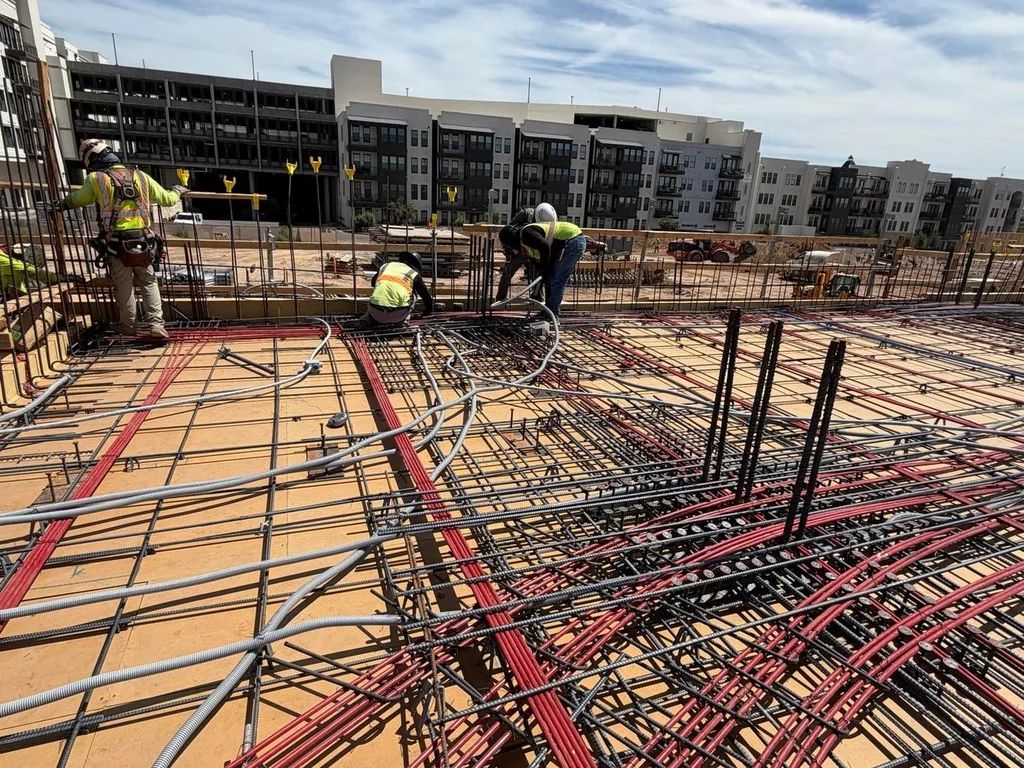
The crew watches what happens to him. Every guy on that job is taking notes on the first person who speaks up, and whatever happens to that man becomes the rule. Thank him and fix it, and you'll hear about the next one. Blame him, brush him off, or make him the guy who slowed the job down, and that's the last report you'll get.
I've seen what the second outcome looks like.
On one job I walked, there were hundreds of sticks of exposed rebar. The crews knew. Nobody reported it. When we dug into why, it wasn't laziness and it wasn't ignorance. Nobody wanted to be the snitch.
Think about the math on that. By our own estimate on that job, guarding it was going to cost somewhere around $2–5k. OSHA's 2026 maximum for a willful or repeat violation is $165,514, per OSHA's published penalty table. And the penalty is the small number here. The big one is a guy going down onto an uncapped stick.
We didn't fix it with a lecture about reporting. We changed the permission structure. Speaking up had to become something the crew was expected to do, and something a guy got credit for, instead of something that marked him.
On your job, a permission structure comes down to three things the foreman says out loud at the morning huddle and then keeps. Who a guy tells: the foreman by name, or anybody on the crew, who passes it up the same hour. What happens to the report: the hazard gets fixed, or work stops on it, that shift. And what never happens: nobody gets written up for a hazard he reported. Say it once and it's a speech. Keep it the first time it costs you an hour, and the crew starts believing it.
Sometimes the report doesn't even come in words. I've had a crew working 9-foot walls off a 4-foot ladder, which pushed them onto the top step every day. That misuse was a report — they were telling us the job didn't give them the right tool. We spent $200 on a six-foot ladder, told the guys honestly why we bought it, and they used it right away. No enforcement needed.
When the first guy speaks up, here's what the foreman does, in this order:
- Thank him by name, right then, where the crew can see it.
- Fix it or stop work on it today, because a thank-you with no fix teaches the crew that reporting is theater.
- Before the end of the shift, tell him what you did about it.
- At the next toolbox talk, name the guy, name the hazard, and say what changed. That one minute does more for buy-in than any speech you'll give all year.
- Keep his name off any write-up for the same hazard. If he was part of the problem, deal with it another day, separately.
Can a foreman get crew buy-in when he's afraid of his own guys?
Not by himself, and that's the part most owners skip. A foreman who dreads his own crew's reaction can't thank the guy who reports a hazard, because every report hands him a fight he doesn't believe he can win. Buy-in starts with whoever is above the foreman taking that fear off him.
I've stood on that job. During an inspection in Phoenix, I found a crew working the exterior top plate thirty feet up, none of them tied off. When I talked with the foreman, the issue wasn't what he knew. He was intimidated. He knew how his guys would respond if he held the line.
You can't ask that man to build a reporting culture. He's barely holding his own.
So the work goes upstream. The person who runs the job has to make it clear, out loud and on the record, that the foreman stopping work over a hazard is backed every time. Then the standard stops being the foreman's personal opinion. It becomes the crew's.
The rules point the same direction. Under 29 CFR 1926.20(b)(2), the employer's safety program has to provide for frequent and regular inspections of the job sites, materials, and equipment by competent persons designated by the employer. That puts the program on the employer. It was never meant to rest on one foreman standing alone on a deck.
This is where I see the most programs break, honestly. Owners put the foreman in charge of buy-in and then leave him out there by himself with it. Crews don't resist safety. They resist feeling blamed. Foremen are the same way.
How do I tell real buy-in from a crew that's just staying quiet?
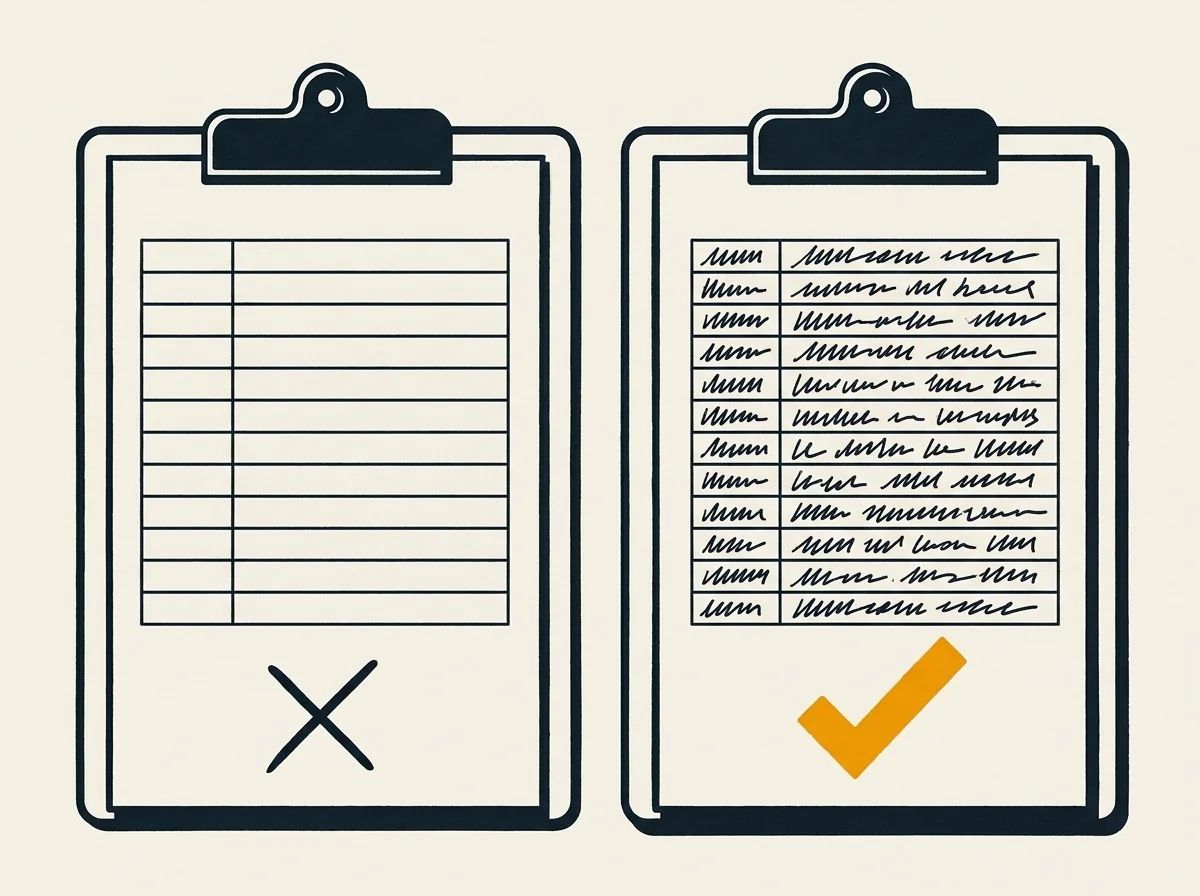
Count the reports. A crew that has bought in tells you about hazards, near misses, and missing gear without being asked, and those reports come from task-level employees, not just the foreman. A crew that's staying quiet gives you a clean log and a bad feeling.
Zero hazard reports in a month on an active job measures silence. Treat it as a warning.
Here's how the two look side by side:
| What you see | A quiet crew | A crew that's bought in |
|---|---|---|
| Hazard reports in a week | None, or only from the foreman | Several, from different guys |
| Who calls stop work | Nobody, or only the safety person | A task-level employee, and nobody argues |
| The toolbox talk | One guy talks, the rest look at their boots | Guys bring up things they saw yesterday |
| After a near miss | You hear about it secondhand, days later | You hear about it the same shift |
| When you walk up | Conversation stops | Somebody walks over to show you something |
If I were checking one of your jobs this week, I'd start by pulling the last 30 days of reports and sorting them by who made them. When every report came from the foreman or the safety coordinator, the crew has handed reporting up the chain and stopped there.
Then I'd find a task-level guy and ask him what happened to the last person who reported something. Ask him, not the foreman. A shrug or a laugh tells you plenty.
Last, I'd stand at the back of the morning meeting and count the guys who say something. On a crew that's bought in, somebody always brings up what he saw yesterday.
None of this needs software to start. A notebook and an honest count will tell you plenty. It gets harder once you're tracking a dozen crews, which I'll come back to.
If you want the bigger picture of how that reporting side of culture differs from the paperwork side, it's laid out in how safety culture differs from a compliance program.
When does thanking the first report backfire?
Thanking a report backfires when nothing gets fixed afterward. A guy who gets a handshake in front of the crew and then watches the same open edge sit there for two weeks learns that your thanks is cheap. Hold off on making a show of it until you can back it with a fix the same day.
Buy-in also won't carry you through an inspection. An inspector reads your training records, your signatures, and your corrective actions, so keep those on file no matter how good the crew is.
And buy-in sits on top of the injury-reporting rules. Under 29 CFR 1904.35(b)(1)(iv), you must not discharge or in any manner discriminate against any employee for reporting a work-related injury or illness. That's the legal floor. For what it means for your own policies and incentive programs, consult your safety professional.
Piece crews are the hard case. Guys who hop companies every few weeks don't stick around long enough to see the second report get thanked, so plan on running the first-day version of this with every new crew that shows up.
One more thing, to be straight with you. What I'm telling you comes from what I've seen on jobsites, not a controlled study. I'll stand behind it, but I won't call it research.
Start with the next report
Tomorrow, the first hazard anybody brings you, thank him in front of the crew and fix it before lunch. Then watch who talks to you on Thursday.
Doing that on one job is a habit. Doing it across every crew you run, with every report logged, every fix closed out, and every guy hearing back, is a team's worth of work. Safirst ONE is how foremen pre-plan daily operations, crews report hazards without fear, and leaders build safety culture at scale. If you'd rather start with a second set of eyes on one job, ask us out for a jobsite walk.
The ROI I care about first is life safety. Families intact. Reputation intact.
Let's go.