Toolbox Talks
Bloodborne Pathogens Toolbox Talk
Published · 3 min read
A free, ready-to-run toolbox talk for construction crews. Read it aloud at your morning huddle; it takes about ten minutes. Leer en español →
OSHA standard: 29 CFR 1910.1030
At a glance
- Every injury response is a potential exposure — treat all blood as infectious
- Gloves on BEFORE helping a bleeding coworker; barriers before CPR
- Sharps, broken glass, and contaminated debris: tools, never bare hands
- Any blood contact with your eyes, mouth, or broken skin gets reported same-day
Introduction
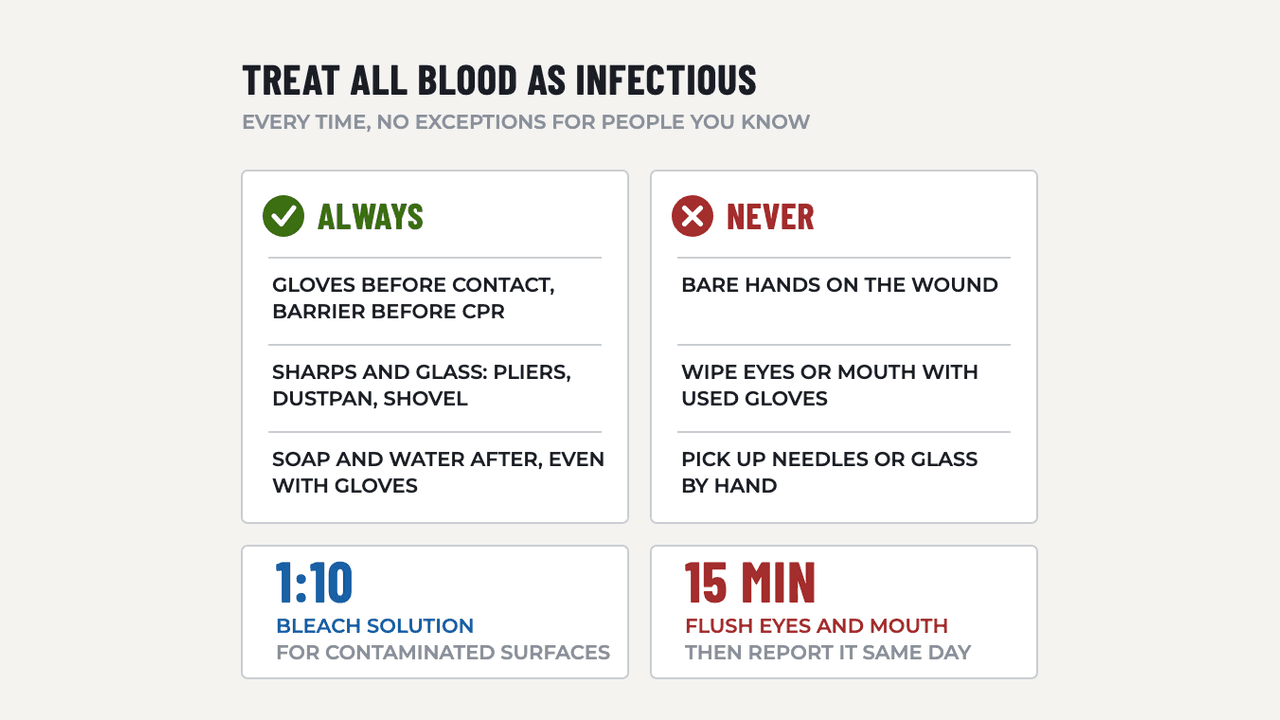
When a coworker goes down bleeding, the instinct is to grab the wound with bare hands. That instinct can transmit hepatitis B, hepatitis C, or HIV — pathogens that live in blood and don't announce themselves. The rule that protects you is universal precautions: treat ALL human blood as infectious, every time, no exceptions for people you know. Today's talk covers responding to injuries safely, cleanup, and what to do if you're exposed.
Universal Precautions
- All blood and body fluids are treated as infectious — the person's health history is unknown and irrelevant to the procedure
- Nitrile gloves from the first aid kit BEFORE contact with blood — takes five seconds, keep them stocked and in reach
- A CPR barrier mask goes between you and mouth-to-mouth; know where it lives in the kit
- Cover your own cuts and cracked skin before shift — broken skin is an open door
Injury Response
- Gloves on, then pressure on the wound — the injured person can often hold their own pressure while you glove up
- Keep blood off your face: don't wipe your eyes or mouth with contaminated gloves
- Gloves off by peeling inside-out, and wash hands with soap and water even after gloves — every time
- Hand sanitizer is the stopgap; soap and water is the standard
Cleanup & Sharps
- Blood on tools, surfaces, or equipment: gloves on, absorb it, then disinfect with a 1:10 bleach solution or approved disinfectant
- Contaminated materials — soaked gauze, gloves, clothing — bag them; they don't ride loose in the trash with lunch garbage
- Never pick up broken glass, needles, or bloody debris by hand — pliers, dustpan, shovel
- Found needles (encampments, renovations, cleanouts) go in a rigid container via tool, and get reported
If You're Exposed
- Exposure = blood contact with eyes, nose, mouth, broken skin, or a puncture from a contaminated sharp
- Wash or flush the area immediately and thoroughly — eyes and mouth with water for a full 15 minutes
- Report it SAME-DAY: post-exposure treatment for hepatitis B and HIV works best started fast — this is a medical clock, not paperwork
- Hepatitis B vaccination is available to anyone with first-aid duties — take it before the incident, not after
Key takeaways
- All blood is treated as infectious, always
- Gloves before contact; barrier before CPR
- Wash with soap and water even after gloves
- Sharps and bloody debris move by tool, not hand
- Bleach solution for contaminated surfaces
- Exposure = flush now, report same-day
Questions for your crew
- Treat all blood as infectious, always — every injury response is a potential exposure.
- Gloves on BEFORE helping a bleeding coworker, and a barrier device before CPR.
- Wash with soap and water after any response, even if you wore gloves.
- Sharps, broken glass, and bloody debris move by tool — never bare hands.
- Contaminated surfaces get a bleach solution, not just a wipe-down.
- Blood contact with your eyes, mouth, or broken skin: flush now, report same-day.
Run this talk with crew sign-offs
This talk is part of the Safirst ONE toolbox talk library, in English and Spanish. Your foreman picks the talk in the app, the crew signs from their own phones by scanning a QR code, and the signed record files itself in your Docs Locker. Talk to Safirst to get it for your crews.