Toolbox Talks
Monsoons & Dust Storms (Arizona) Toolbox Talk
Published · 3 min read
A free, ready-to-run toolbox talk for construction crews. Read it aloud at your morning huddle; it takes about ten minutes. Leer en español →
OSHA standard: General Duty Clause 5(a)(1)
At a glance
- Monsoon season: mid-June through September — afternoon storms build fast
- Lightning: hear thunder, clear the steel, the roof, and the lifts
- Haboob rolling in: secure the site, shelter, and stay off the road
- A site that got hit gets re-inspected before work resumes
Introduction
Arizona's monsoon isn't background weather — it's a daily afternoon hazard from mid-June into September that brings lightning, 60+ mph outflow winds, walls of dust, and flash flooding, often with less than an hour from blue sky to full storm. The crews that get hurt are the ones that tried to finish "one more course" as it arrived. Today's talk covers reading the buildup, the order to shut down in, and the drive home through a haboob.
See It Coming
- Check the forecast at morning huddle during monsoon season; assign someone to watch the sky and radar in the afternoon
- Towering clouds, a sudden cool gust, or a brown wall on the horizon = the storm is already arriving — outflow winds run miles ahead of the rain
- Agree the shutdown trigger in the morning, not in the moment
Lightning
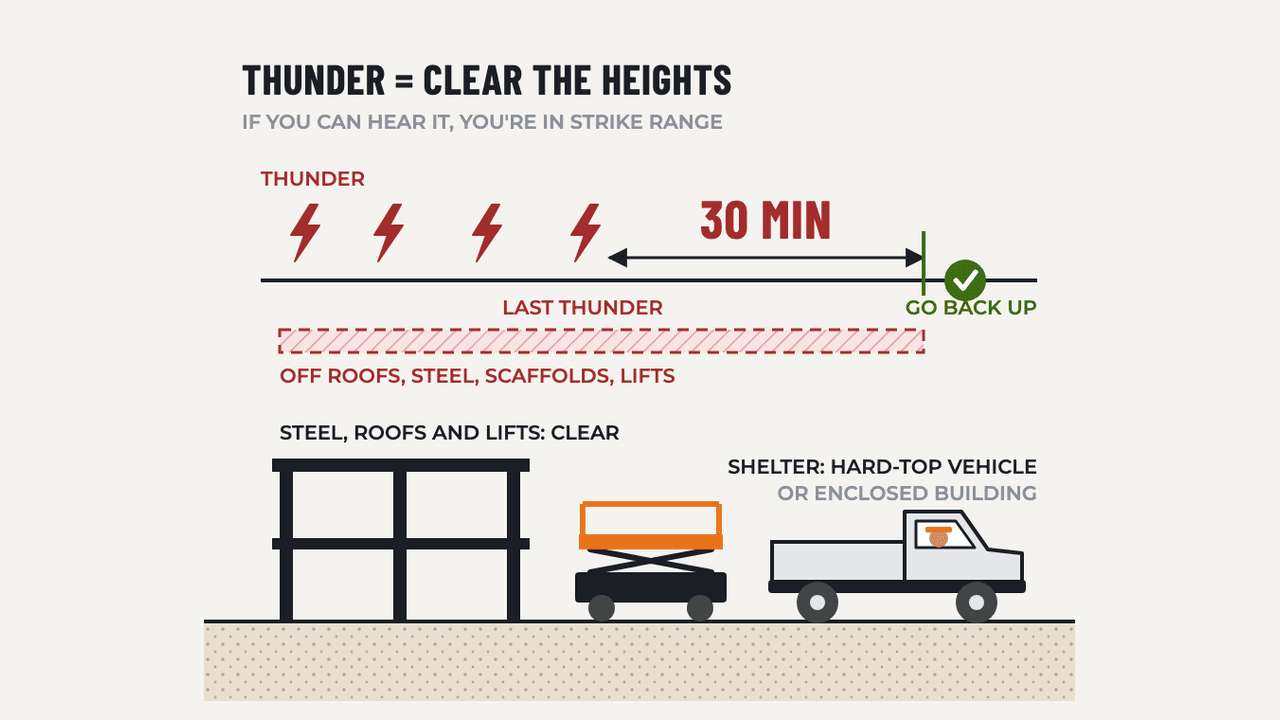
- If you can hear thunder, you're in strike range — clear rooftops, steel, scaffolds, lifts, and open equipment NOW
- Cranes boom down or secure per the manufacturer; nobody rides a storm out in a lift basket
- Shelter in enclosed buildings or hard-top vehicles — not under trees, not in connex doorways, not against the fence
- Wait 30 minutes after the LAST thunder before going back up
Wind & Dust
- Outflow gusts flip stacked sheet goods, roll empty gang boxes, and turn form panels into sails — secure or flat-stack loose material EARLY, it can't be done mid-gust
- Scaffolds, fencing, and temporary structures get checked and braced before season and re-checked after every blow
- In a haboob: eye protection means nothing at zero visibility — stop work, get inside, wait it out; it usually passes in under an hour
- Driving into one: pull fully off the road, engine off, LIGHTS OFF, foot off the brake — lights on invites a rear-end from drivers following your glow
Water
- Trenches and excavations flood fast and collapse when soaked — nobody enters a wet trench until the competent person re-inspects
- Washes and low crossings flash-flood from storms you can't see upstream — never cross moving water, on foot or in a truck
- After the storm: re-inspect trenches, scaffolds, electrical, and anything that got wet or wind-loaded before work resumes
Key takeaways
- Watch the sky after noon, June through September
- Thunder = clear heights and steel; 30 minutes after the last clap
- Secure loose material before the wind, not during
- Haboob on the road: pull off, engine off, lights off
- Wet trench = closed until re-inspected
- Storm-hit site gets re-inspected before restart
Questions for your crew
- Monsoon season runs mid-June through September: check the forecast at morning huddle and agree the shutdown trigger before the storm, not during.
- If you can hear thunder you're in strike range — clear rooftops, steel, scaffolds, and lifts NOW, and wait 30 minutes after the last thunder.
- Outflow gusts arrive miles ahead of the rain — secure or flat-stack loose material EARLY; it can't be done mid-gust.
- Caught driving in a haboob: pull fully off the road, engine off, LIGHTS OFF, foot off the brake.
- Trenches flood and collapse when soaked — nobody enters a wet trench until the competent person re-inspects, and never cross moving water.
- After the storm, re-inspect trenches, scaffolds, electrical, and anything wind-loaded before work resumes.
Run this talk with crew sign-offs
This talk is part of the Safirst ONE toolbox talk library, in English and Spanish. Your foreman picks the talk in the app, the crew signs from their own phones by scanning a QR code, and the signed record files itself in your Docs Locker. Talk to Safirst to get it for your crews.