Toolbox Talks
Guardrail Systems Toolbox Talk
Published · 3 min read
A free, ready-to-run toolbox talk for construction crews. Read it aloud at your morning huddle; it takes about ten minutes. Leer en español →
OSHA standard: 29 CFR 1926.502(b)
At a glance
- The best fall protection is the kind you can't forget to wear
- Top rail 42 inches (±3), midrail halfway, 200-pound strength
- A removed rail section is an open hole — guard it or tie off
- Caution tape is not a guardrail. Ever.
Introduction
A guardrail is the only fall protection that works with zero worker action — no harness to don, no anchor to find, no habit to maintain. That's exactly why a missing or flimsy rail is so dangerous: everyone trusts the edge is protected right up until it isn't. Today's talk covers what a legal guardrail actually is, when a rail comes down and what replaces it, and the imposters — tape and rope — that protect nobody.
What a Real Guardrail Is
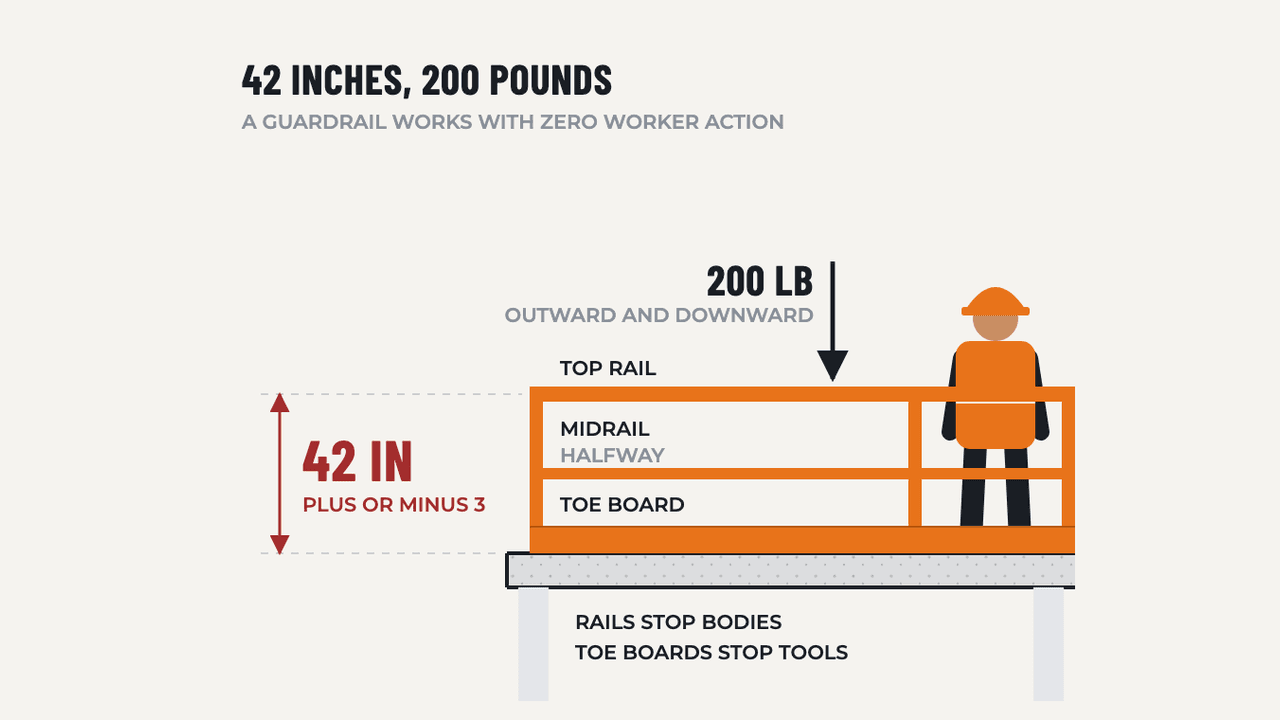
- Top rail at 42 inches, plus or minus 3; midrail centered between top rail and surface
- Withstands 200 pounds outward and downward on the top rail — lean-test it: if it wobbles under a hand, it fails under a body
- Toe boards where people work or walk below — rails stop bodies, toe boards stop tools
- Surfaced smooth (no snag or laceration points), ends not overhanging as impalement/trip points
- Wire-rope rails flagged every 6 feet and tensioned — a saggy cable is a trip line at ankle height and a limbo bar at the top
Openings & Removals
- Rail comes down for material landing or hoisting? The opening gets a gate, chains, or a tied-off worker — an unprotected gap never waits "just a minute"
- The person who removes a rail owns its replacement — same shift, same task, or hand the duty off explicitly
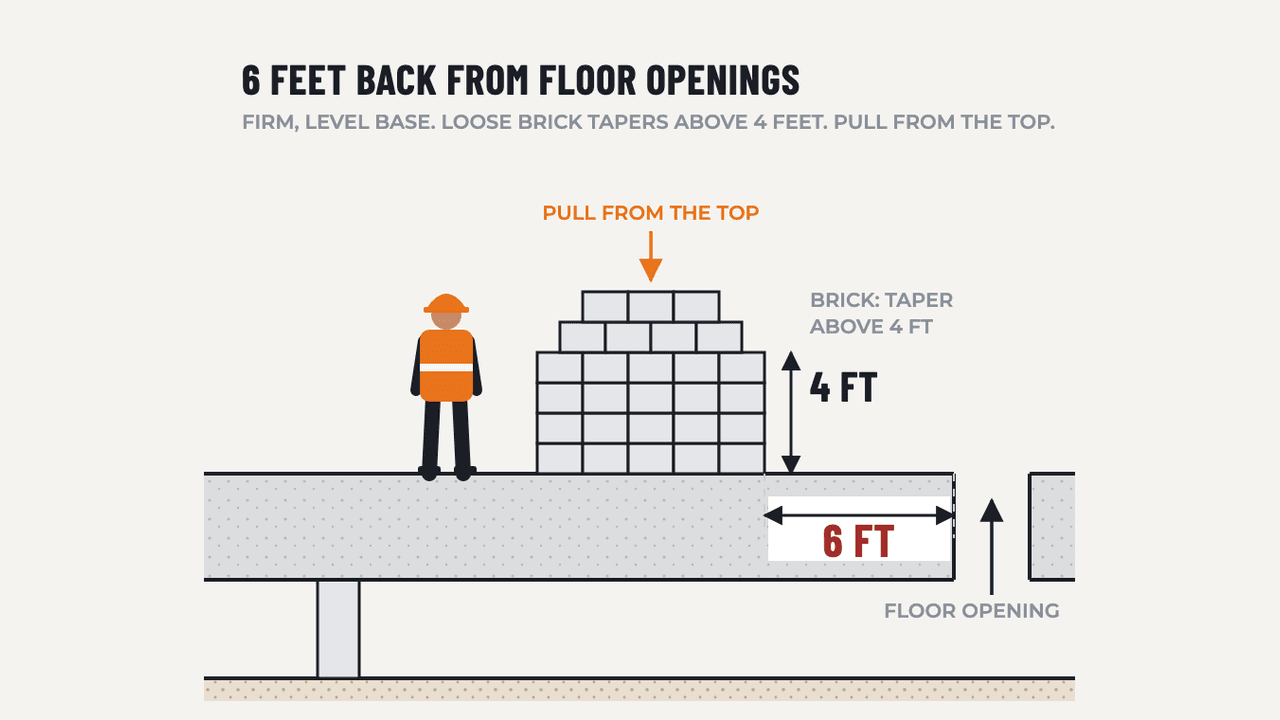
- Holes and skylights count as edges: covers secured and marked, or railed
- Stairwell and elevator-shaft edges are guarded from the day the deck exists
The Imposters
- Caution tape, danger tape, and rope mark a hazard — they restrain nothing and satisfy no standard where fall protection is required
- A warning-line system is a real, specific system for certain roof work — not a length of rope on stakes
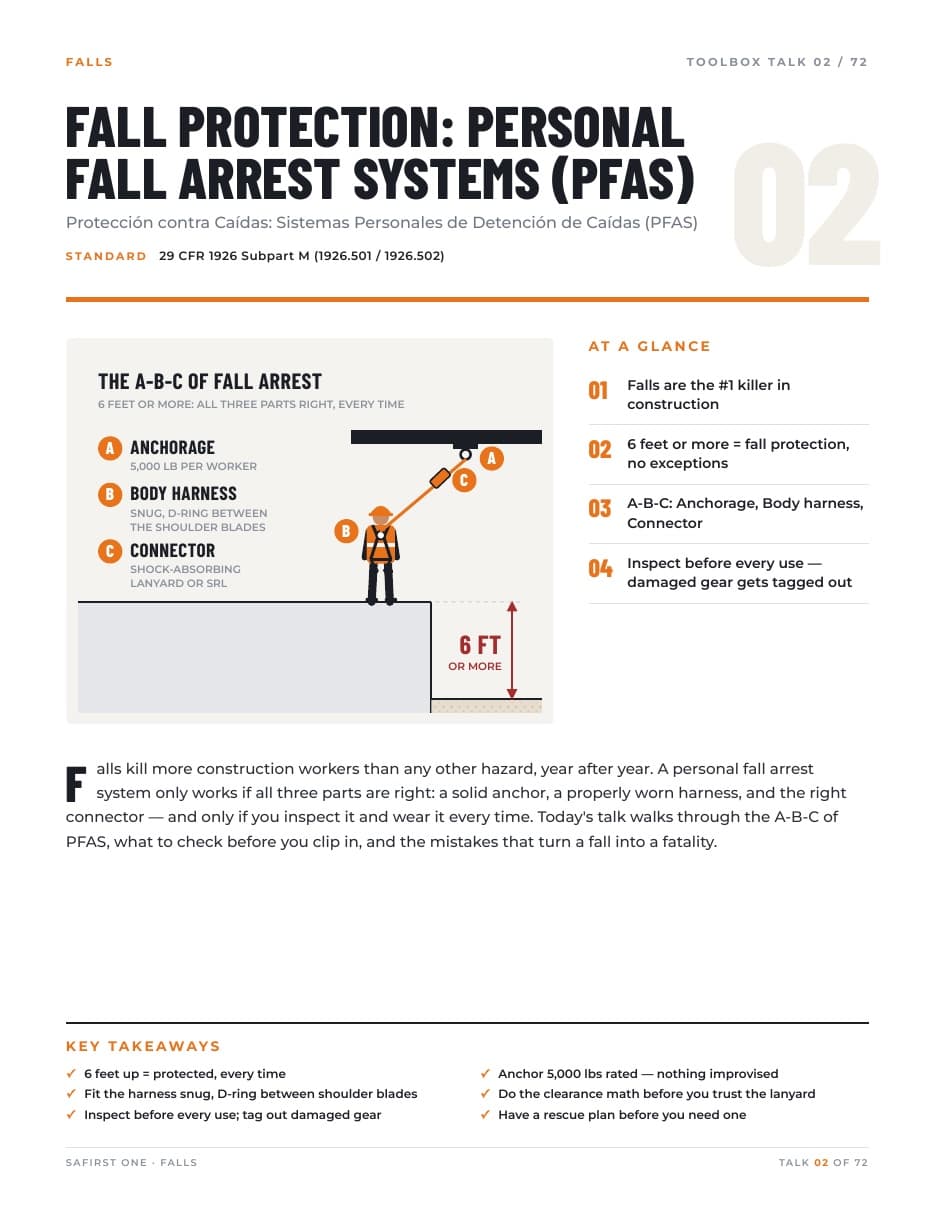
- If the edge is 6 feet up or more and the "protection" would not stop a walking adult, it is not protection — fix it or clip in
Key takeaways
- 42-inch top rail, midrail, 200-pound strength
- Lean-test: wobbles under a hand, fails under a body
- Toe boards protect the people below
- Remove a rail, own its replacement
- Covers secured and marked on every hole
- Tape is a sign, not a system
Run this talk with crew sign-offs
This talk is part of the Safirst ONE toolbox talk library, in English and Spanish. Your foreman picks the talk in the app, the crew signs from their own phones by scanning a QR code, and the signed record files itself in your Docs Locker. Talk to Safirst to get it for your crews.