Newsletter
The alarm sounds. Can your crew actually get out?
Published · 4 min read
From Brandon Glenn’s Safirst newsletter on LinkedIn.
In the last Field Report, I shared a hot work fire we had in 2024. When the signal sounded, crews left the building. They gathered at their muster stations.
That incident deserves a deeper look. Activating an emergency action plan is only one part of getting people to safety.
You can post an EAP. You can mark exits and put maps on every floor. You can cover evacuation at orientation, run drills, and brief every new subcontractor.
Those things matter. But when the alarm sounds, the jobsite decides whether people can act on that preparation.
Preparedness saves lives when the field conditions support the plan.
A route that worked last week may be blocked by today's drywall delivery. A stairway may be closed for work. An extinguisher may be hidden behind materials. A worker in earbuds may miss the signal entirely.
These are the details to manage before an emergency.
1. Keep the entire escape route clear
Housekeeping is basic fire prevention. Scrap lumber, packaging, cords, hoses, and material stacks can feed a fire. They can also block someone trying to escape.
Walk the route yourself. Start at the actual work area. Go through the stairway and exit, all the way to the muster station. Check doors and gates from the inside. Keep exit signs visible as walls go up.
OSHA requires construction exits to stay marked and clear for immediate use. "We'll move it if something happens" is not a plan. OSHA's means-of-egress requirements
2. Make sure workers have a usable way down
On busy multistory projects, prioritize proper stairs or stair towers. A ladder becomes a bottleneck when several crews leave at once.
Plan an alternate escape route from every occupied floor. OSHA's stairway and ladder access requirements
Ask: "If this route becomes unusable, where does everyone go?"
3. Keep temporary fire protection ready
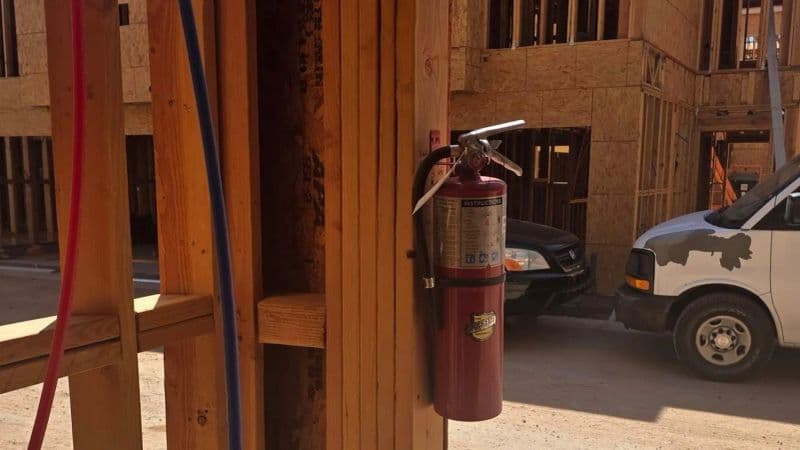
Extinguishers must be properly rated, charged, visible, and easy to reach. Check them visually every month and keep a record. Check again when one is moved, used, damaged, or exposed to harsh conditions. OSHA's construction fire-protection standard
Having an extinguisher does not mean every worker should fight a fire. Follow the site's response assignments and training. Never delay evacuation to protect property.
4. Control what can start or feed a fire
Set clear site rules. No personal hot plates or unauthorized cooking equipment. No smoking inside the building. Enforce the hot work permit and the required fire watch.
Remove combustible waste you don't need. Control how much flammable product is on site, and how it's stored and used. You can't eliminate every material from a building. You can manage it so it doesn't block exits or create avoidable fire hazards. OSHA's construction fire-prevention requirements
5. Make sure everyone receives the warning
My recommended site rule is simple. No AirPods, entertainment earbuds, or loud music in active work areas. Make it site policy, and keep providing required hearing protection.
Test the signal under real working conditions. Can crews hear it over equipment noise? Can they hear it through hearing protection? Where sound alone isn't enough, add a visual alert.
Every new crew needs this before starting work. Repeat it whenever routes, signals, or muster points change.
6. Know what happens after the alarm
Stop work. Follow the designated safe route. Leave tools and belongings behind. Move with purpose, but don't run, push, or enter smoke. If the main route is unsafe, use the alternate.
At the muster station, each subcontractor's lead accounts for their workers against a current roster. Include visitors. Report anyone missing, and where they were last seen, to the emergency coordinator and responders right away. Nobody goes back in to search. Nobody returns to work until authorized. OSHA's emergency-action-plan provisions
Before your next shift
Pick a work area. Walk its evacuation route with the crew.
Can everyone hear the warning, reach safety, and be accounted for, with the jobsite exactly as it stands today?
That is the standard I want us checking in the field. In a serious emergency, the goal is getting every person home.
— Brandon Glenn